Give & Receive Energy

Summary
Passive behavior involves withdrawal, difficulty expressing oneself and relating to others, a tendency to avoid new situations, self-disparagement, and a feeling of inadequacy. The person uses defensive questions and compliments to please others, avoid threats, and seek acceptance. In relationships, uncontrollable neediness causes suffering. Constant tension keeps them on alert. Their inner dialogue, driven by fear, does not resolve issues and limits their life to contradictory thoughts and emotions. Anxiety creates a sense of urgency to resolve everything to avoid anguish and is accompanied by feelings of inadequacy and inferiority.
Source transcript
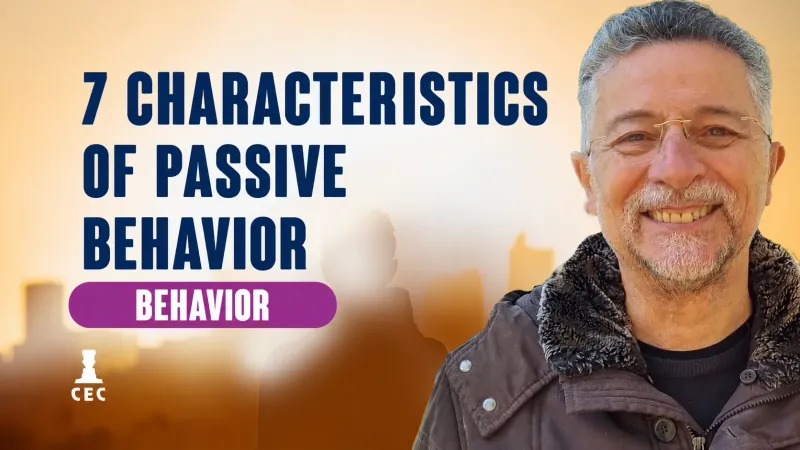
Seven items characterize passive behavior: the person constantly retreats, has difficulty expressing themselves and relating to others, and avoids new situations. This behavior can seriously harm a person's life. We will explore these seven items so that we can later work on how to overcome them. The first item is self-devaluation. A passive person constantly devalues themselves, believing that they never do anything right and seeing themselves as the last person in the world. This devaluation may be internal or triggered by comments that the person interprets as belittling. Even compliments may be perceived negatively. It is crucial to identify this tendency in order to overcome it.
The second item is a feeling of inadequacy. The person constantly feels out of place, like a fish out of water. This sensation makes them feel displaced in any environment—which needs to be overcome so that they can feel comfortable in their own skin. Another aspect is the tendency to ask questions with a defensive connotation. Instead of seeking information, a passive person asks questions to please or reassure the other person, especially authority figures. This demonstrates a lack of assertiveness.
The fourth item is a flattering statement. A passive person uses praise to avoid threats and be accepted. This strategy is intended to avoid retaliation because a compliment disarms its recipient, who then treats the person more favorably. Uncontrollable neediness is another item. A passive person feels an emotional emptiness that is never filled, which can lead to degrading behavior in an attempt to meet that need. The level of this neediness is also the level of suffering the person will have in the relationship with themselves and with everything around them.
Constant tension is another item. A passive person lives in a state of alertness, always tense, and finds various ways to disguise that tension. Resolving it is essential in order to live more peacefully. Endless inner dialogue is another aspect. A passive person maintains a constant internal conversation that attempts to resolve issues but never reaches a solution. This dialogue is led by fear, which restricts life to the realm of contradictory thoughts and emotions. Finally, anxiety is a crucial item. A passive person feels that they need to resolve everything quickly because otherwise distress sets in. This anxiety is accompanied by feelings of inadequacy and inferiority.
Questions raised by this material
- What are the characteristics of passive behavior?
- Why does a passive person use compliments as a defense?
Keywords
How to cite
Esagüi, M. (2023, April 26). 7 Characteristics of Passive Behavior [Video]. Center for Consciousness Studies. https://centrodeestudos.org/en/library/7-characteristics-of-passive-behavior/