Give & Receive Energy


Summary
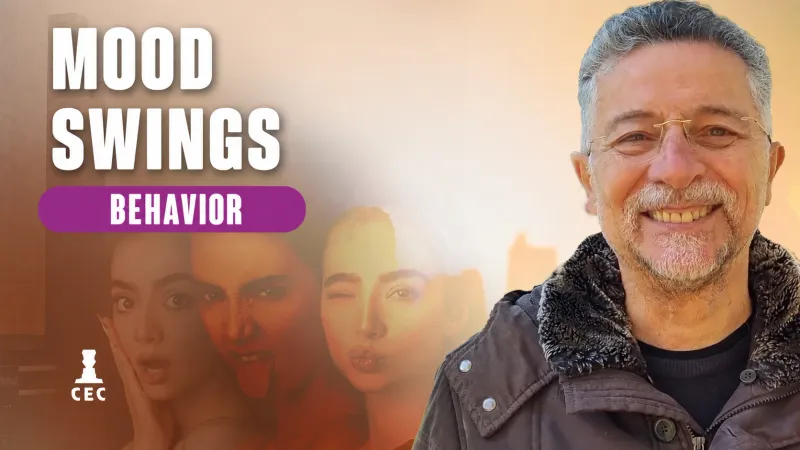
Being compassionate does not mean taking responsibility for other people's emotional content or participating in emotional control tactics that can make those around them ill. Taking care of your own emotions and reassessing your “emotional speed” are necessary to preserve your health and have calmer, more respectful relationships.
Source transcript
We cannot assume responsibility for other people's emotional content. We often believe that we should deal with other people's emotions because we have learned to feel pity, compassion, and mercy. I am not saying that this is wrong, but we frequently feel obliged to comfort those who are sad or take part in the emotional control maneuvers that people carry out. In various situations, dealing with other people's emotions seems necessary for survival.
However, it is important to understand that this is not a healthy path. When someone uses emotional devices, they may end up making the other person ill. There are various ways of manipulating the environment: seducing others, playing the victim, and being aggressive. These actions compromise the environment and other people's health. These attitudes are often attempts to stake out territory and affirm one's own existence, but they reflect unresolved emotional difficulties. When we somatize emotions, we create situations that may be somatized by us or by those nearby. Emotional content is a mixture of contradictions because it involves impulses—such as sexual impulses—that vary in intensity and frequency. This is related to chakras such as the sex and spleen chakras, which influence compulsive and emotional behaviors.
The emotional part and the ego, associated with the navel chakra, are areas that I continually question and research. Truly knowing requires profound knowledge that allows us to apply this understanding in our lives and in the lives of others. Traffic is a clear example of how unstable emotional content is. When we drive at the correct speed of 60 km/h, we are criticized by those who do not follow the rules. This emotional content builds, generating anger and aggressive behavior such as honking and swearing.
A person who acts this way lacks self-awareness and is the same person who will treat others well later. Recently, while I was in a car with someone, a driver behind us was impatient, hitting the steering wheel and honking. We could not leave the lane because the shoulder was in poor condition and there was only one lane. We maintained the correct speed, but the furious driver passed on the shoulder, nearly hitting two sanitation workers who were sweeping the road and became very frightened. He cursed at the sanitation workers and insulted us as if we were to blame for his behavior. This illustrates that we cannot control other people's emotional content. People need to learn to manage their own emotions.
We should reflect on our "emotional speed," which is always altered. We rarely live at the pace appropriate to life, but rather at the pace of the death of consciousness and the body, also affecting those around us. Ideally, each person should take care of their own emotions, which would result in calmer, more respectful relationships. We need to rethink our emotional content to improve our relationships with ourselves and others. Although I used traffic as an example, this dynamic applies to many everyday situations.
Questions raised by this material
- Are we responsible for other people's emotions?
- How does emotional manipulation affect other people?
Keywords
How to cite
Esagüi, M. (2017, September 8). Human Factors - Oops! Taking responsibility for the other person [Video]. Center for Consciousness Studies. https://centrodeestudos.org/en/library/human-factors-oops-taking-responsibility-for-the-other-person/