Give & Receive Energy

Summary
Making the most of your earthly experience involves improving yourself and your relationship with everything. Motivation depends on believing in what you do and finding happiness in it, but life should not be guided by likes and dislikes. You should use good judgment in pushing yourself to improve and express your ideas sincerely, without criticizing others or assuming you are right. The goal is to leave something meaningful for the people around you and keep researching as long as your body allows, because consciousness always continues.
Source transcript
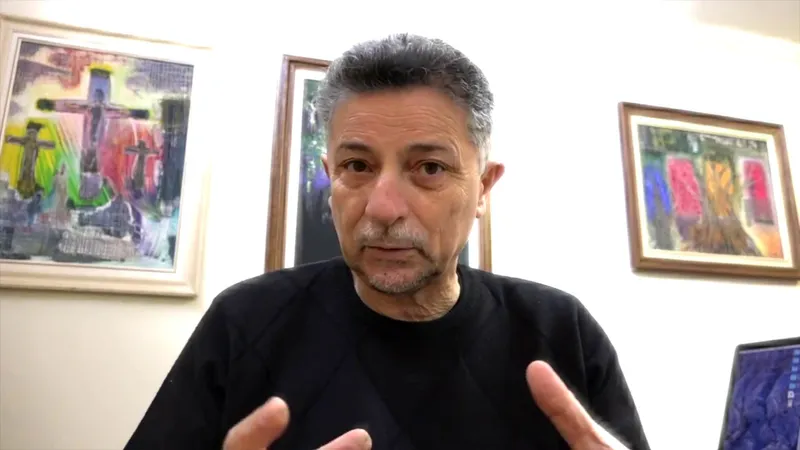
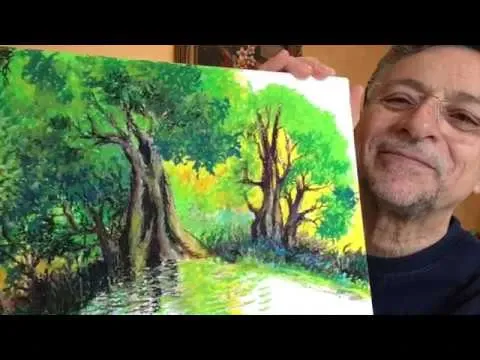
I am working on this painting. When I said that I would put all of my energy into making the most of my path, I spoke with feeling, or so I believe. I gather everything I am, what I have, what I have already lived, and what I still believe I will live, directing my energy toward improving myself and making the most of this physical body. My goal is to leave something meaningful for the people who surround me and for the people who help me a great deal and who have been very important. I do everything I can to build something better: I paint, I play music, I study languages, I record videos, I edit, I write books.
These activities aim to improve our life and to deepen our relationship with everything that exists—something I consider essential. We have learned to relate very badly to human beings and, even worse, to what surrounds us. This lack of perception, perhaps, leads us not to make the most of the earthly experience. Learning to relate to everything is crucial. However, we can only truly motivate ourselves in what we believe in and what brings us happiness, aligning our inner organization to maximize how much we get out of what we do. Any activity that we do not accept wholeheartedly becomes demotivating and tiring.
Life should not be guided by liking or not liking, because that is one of the most terrible emotional factors. We need to improve and make the most of this brief journey, which is only a spark in eternity. When we look back, we discover that we did not do anything we should have. There is no point in looking for excuses, especially ones based on primitive phases of life—such as childhood, adolescence, and the beginning of adult life —, when we have no parameters of common sense, of reality, of the natural sequence of life.
While I paint, I reflect on the importance of living with sincerity and of learning that criticizing others is an incompetence of our own. Everyone has the capacity to accomplish things. We should focus on ourselves, demanding personal improvements based on common sense. The people around us may feel put on the spot, but our intention should not be to evaluate others at the expense of our beliefs. We can present our ideas with sincerity, without the presumption of being right. In this way, the world will become better. Speaking about spirituality and human behavior is important to me, and I keep researching constantly.
I do not believe that a book should be the reference point for life. I will go on exploring until my body no longer allows it, because consciousness always continues. I reiterate that I may be wrong, but this is my perspective.
Questions raised by this material
- How can I find motivation to become a better person?
- How can I express my ideas sincerely without judging others?
Keywords
How to cite
Esagüi, M. (2017, January 15). Human Factors - Paintings: The "Trees" Series [Video]. Center for Consciousness Studies. https://centrodeestudos.org/en/library/human-factors-paintings-the-trees-series/