Give & Receive Energy

Summary
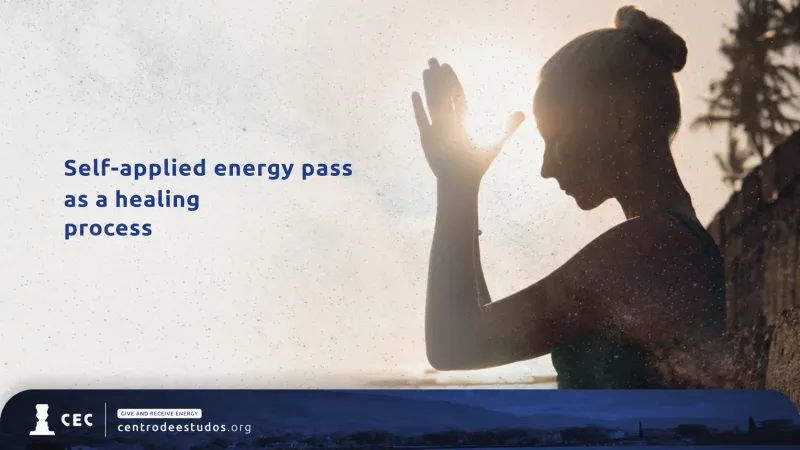
Self-administered healing passes, or self-laying on of hands, are part of an ongoing healing process that involves energy balance and physical and emotional changes. To practice this, prepare the environment, stay focused, and direct energy toward yourself, with your hands on the crown chakra or over the painful area, for as long as you feel is necessary. Experimentation makes it possible to identify what works for each person. Studying and starting the practice before a crisis help sustain it through emotional fluctuations. Personal effort is essential for evolution, and always relying on others for healing means missing the opportunity to learn from this process, although the need for outside help varies.
Source transcript
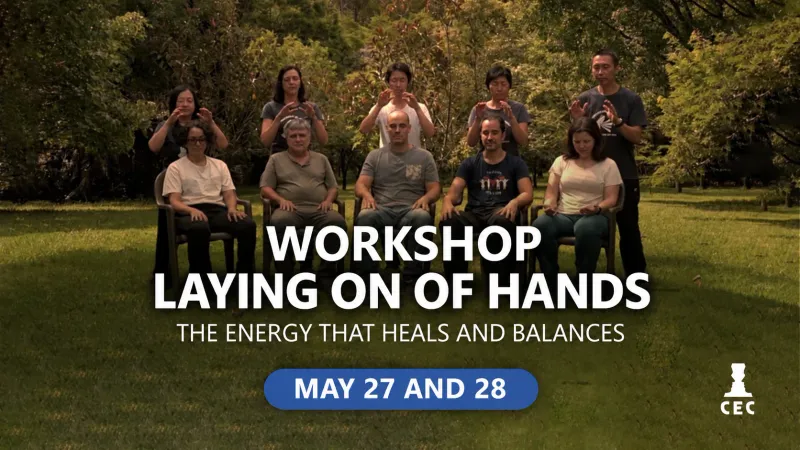
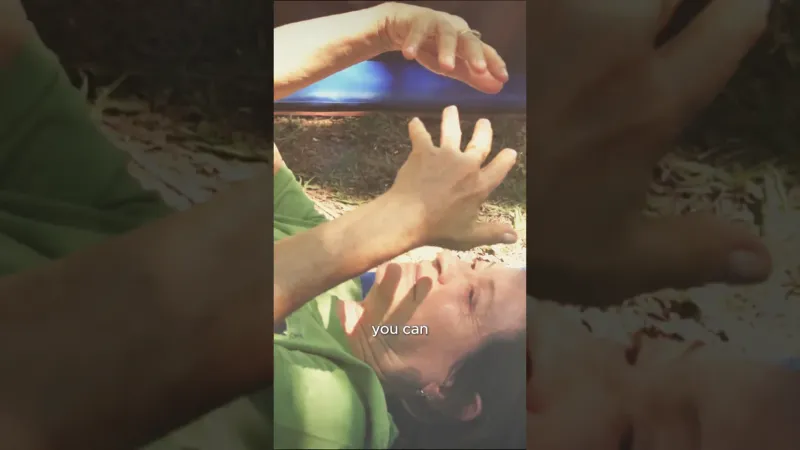
Today we are going to talk about self-administered energy passes as a healing process. The term "self-administered energy pass" refers to "self-laying on of hands." We do not want the terminology to sound strange: you may call it a self-administered energy pass or self-laying on of hands; it makes no difference. The use of self-administered energy passes and other techniques, such as circulation of energy, can become automatic with practice. These techniques are extremely useful in daily life, helping one deal with energetic and physical demands. It is possible to practice a self-administered energy pass every day, adapting it according to the situation, whether as preparation for a spiritual practice or to feel better.
We want people to view the term "healing" broadly, not merely as the absence of illness, but as energetic balance. Energy can help in various situations, such as momentary pain or a lack of mental clarity. Each person has a unique experience with energy, and it is important to explore and understand how it acts in each individual. When discomfort arises, one assesses whether self-laying on of hands or circulation of energy is more appropriate. The more we practice, the more familiar we become with energy and with the ability to perform this energy work.
Many people's initial tendency is to use laying on of hands in moments of pain, such as knee pain. However, one realizes that it is also effective for physical discomfort, working on various chakras. Thus, the use of this technique is expanded, alternating between laying on of hands and circulation of energy as needed. We have incredible tools here, and the hand is one of them. We increasingly learn to use it and understand the benefits that this brings to our lives. Initially, many people begin using laying on of hands when they feel pain, such as a headache that was not theirs but something external. This practice can be a powerful tool. Over time, we broaden our experience, because many seek a manual, but true learning comes from personal experimentation.
What is a self-administered energy pass or self-laying on of hands like for you? Where should it be applied? On the crown chakra to distribute the energy throughout the body, or directly to a specific area of pain? We can share knowledge and experiences, but it is important to remember that each person is unique. Each of us functions differently, and a technique may work better for some than for others because of matters of focus and posture.
A common occurrence is that, when we come into contact with this practice, we perceive its potential. However, we often cannot maintain the practice. We know that laying on of hands brings countless benefits, such as cleansing the environment and personal well-being, and that it serves 99.9% of people, but maintenance is a challenge. This is due to our emotional processes and cycles. When something is not consolidated within us, self-maintenance does not occur naturally.
Examples of people who live spirituality fully, such as Moisés, show that it is possible to maintain and expand spiritual practices with new learning and activities. However, working in this way is challenging. Even something simple, such as self-laying on of hands, can fluctuate in our lives. Study is essential because it involves and fulfills us, allowing the practice to move beyond superficiality and reach a deeper level of feeling.
Studying, practicing, and deepening one's knowledge are fundamental, especially while we are still navigating superficiality, a common emotional tendency. We often begin something only when we already need it, making self-maintenance difficult. We feel a small block but continue working, ignoring it until the situation becomes worse. Only then, when the pain is unbearable or the energy is depleted, do we seek help. This leads us to ask: how long can we sustain work involving self-laying on of hands or a self-administered energy pass? We need strength to continue, especially when we begin in poor condition. If we begin now, before we are in crisis, the practice will become part of our life, unlike when we are already debilitated.
The logic we learn is that, if we are not well, we need help. However, we should deconstruct this idea because we have an incredible potential for change. If we always look outward, outsourcing our healing, we lose the opportunity to learn from our individual path. We should ask ourselves: how much effort did we make before seeking outside help? This applies to every aspect: evaluating our actions, our energy, and how much we can work on it. Depending on our characteristics, the portion that falls to us may be 90% or, under difficult conditions, 30%, with 70% outside help.
Evaluating how much we can do for ourselves is crucial to our evolution, which occurs only through personal effort. One inspiring story is that of Ms. Olga Maruishi, a devout member of the Messianic Church who, after a car accident that killed all the relatives riding with her and broke all her bones, refused medication and brought about her own healing through self-laying on of hands. She had an elevated consciential condition and dedicated herself fully to this work, surprising even the doctor, who found her already walking out of the room. More than 80% of the population is at a lower consciential level. This story reminds us that, even when we think we have nothing, we have our hands, our greatest tool and energy powerhouse. The question is: how many of us would have the emotional strength to heal ourselves in extreme situations?
When we talk about self-laying on of hands, we are dealing with an energy pattern and an inner strength. The healing process is broad and involves changes, consumption of enlightening content, and dedication to energy work. Strength also comes from nourishing ourselves with good content and living the practice from beginning to end. It is important to prepare the environment, focus on the work, and determine that the energy is being directed toward ourselves. It is not necessary to close one's eyes, but rather to be present and aware of what we are doing.
A story that illustrates the capacity for transformation is that of a person who, while experiencing depression, began exteriorizing energy into the environment while bedridden and without strength. The person nourished themselves with enlightening content, watched lectures, and set their life in motion, transforming completely. She even cycled across Europe despite having no money. This shows that, even under difficult conditions, it is possible to heal one's own life, not only physically but emotionally, because illnesses often reflect our emotional state.
For those who wish to begin the practice of self-laying on of hands, it is important to prepare the environment, focus on the work, and sense the time needed for each session. The practice should be part of daily life, and the energy should be directed consciously. Healing is a continuous process, and we should open ourselves to feeling and experimenting, always seeking to evolve through personal effort.
Questions raised by this material
- How is a self-administered energy pass practiced?
- What is self-laying on of hands used for?
- Why does the practice of self-administered passes vary from person to person?
- How can I maintain a daily self-laying on of hands practice?
- What role does personal effort play in the healing process?
Keywords
How to cite
Murad, A., & Cabral, P. (2023, April 25). Self-Healing Pass as a Healing Process [Video]. Center for Consciousness Studies. https://centrodeestudos.org/en/library/self-passe-as-a-healing-process/