Give & Receive Energy

Summary
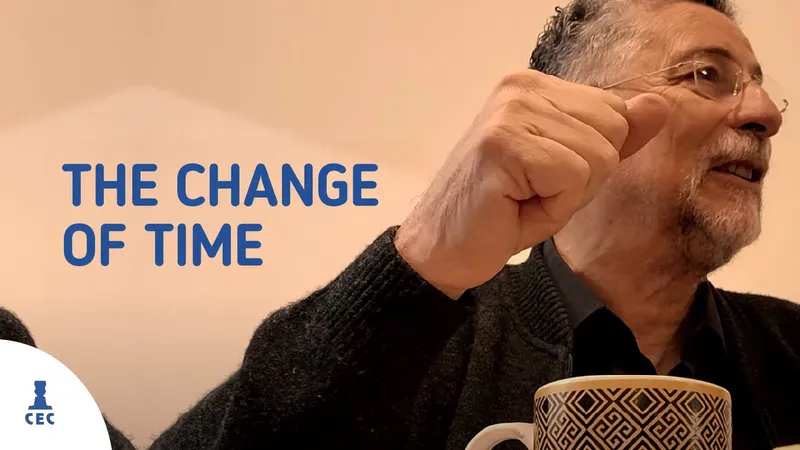
Our internal sense of time varies with age, emotions, activities, and the pace of the people we spend time with, and emotional time may not correspond to real time. Other species have different rhythms, and living longer would require calming the heart and slowing down, which the hectic pace of modern life makes difficult. Slowing down is also necessary to act efficiently: full attention allows us to complete many activities without rushing, even if this seems fast to others.
Source transcript
The concept of time is not universal: it can vary according to the planet or a person's age. When we are young, time seems different from how it does when we grow older. At age 10, for example, inner time is longer, while in old age it seems shorter. This is not merely a subjective perception; it is a real experience. As we perform more activities, time seems to diminish.
The time we feel can change for us and for others. Reality is relative, and emotional time may not correspond to real time. If our emotional reality changes, time may seem distorted. It is important to remain within the time we consider coherent. One person's time can influence another's: if we live with someone who moves very quickly, this can alter our inner time. If one person can perform 10 tasks while another performs 5, the dynamic between them will be different. In a slower community, the interaction of forces can affect our pace.
Historically, time seemed longer. One hundred years ago, people performed many activities throughout the day. As time passes, our perception of time becomes shorter. Children, for example, have difficulty waiting for lunch, while adults perceive time differently. This process is natural for us, but it can vary for other forms of life. Different species have distinct rhythms and perceptions of time: an octopus's time is different from ours, because its heartbeats are different, and a turtle's, which lives a hundred years, is different too. To live longer, it would be necessary to calm the heart and slow down, but modern agitation makes this difficult.
It is not necessary to perform many activities quickly. Until a while ago, I did 22 activities without rushing and could finish each one. With absolute attention, it is possible to complete tasks efficiently. Full attention makes it possible to perform activities completely, without haste. Even if it seems fast to others, efficiency comes from total concentration. Lack of attention is an obstacle: we often do everything in a hurry, without focus. To achieve efficiency, it is necessary to slow down and give complete attention to what one is doing.
Questions raised by this material
- What makes time seem to pass faster or slower?
- How does paying attention help you complete tasks more efficiently?
Keywords
How to cite
Esagüi, M. (2023, January 4). The Change of Time [Video]. Center for Consciousness Studies. https://centrodeestudos.org/en/library/the-change-of-time/