Give & Receive Energy

Summary
The WHO classifies processed meats as carcinogenic and unprocessed meats as probably carcinogenic. A well-planned vegetarian diet provides protein and amino acids, including for muscle hypertrophy, by replacing meat with legumes and combining grains, leafy greens, vegetables, and fruits. This foundation of natural, whole foods can be more economical, and its fiber benefits the microbiota and metabolism. The transition requires adjusting calorie intake and taking intestinal tolerance into account. Large amounts of calcium can reduce iron absorption; vitamin C enhances it. Iron deficiency generally requires supplementation. B12, ferritin, and other markers should be evaluated together, since results within the reference range do not guarantee good nutritional status.
Source transcript
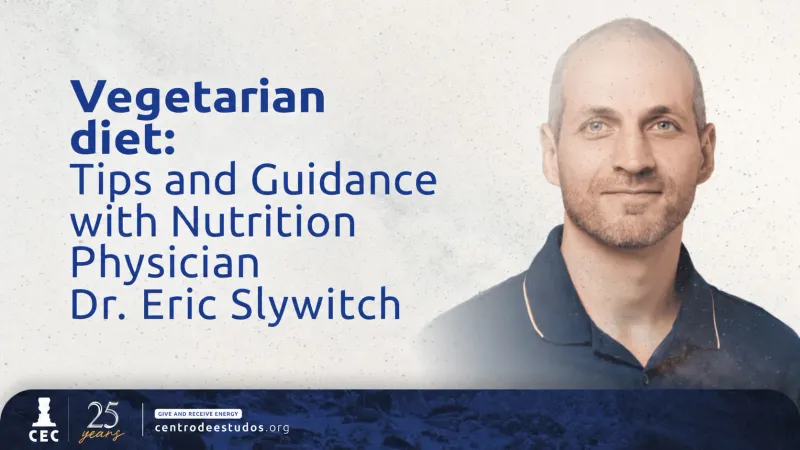
I am Dr. Eric Slywitch, and as a teenager I began studying martial arts and philosophy, including Taoism and Buddhism. Thirty years ago, I discovered macrobiotic eating, which brought me fantastic health results. This led me to study medicine in order to understand the physical and biochemical connection behind those results. During medical school, I followed a hygienist, natural, whole-food diet without meat, cheese, milk, or eggs. After graduating, I specialized in enteral and parenteral nutrition—the opposite of philosophical approaches to integrated eating.
For ten years, I worked coordinating a hospital in this field and completed specializations in nutrology, endocrinology, and clinical nutrition. My master's degree and doctorate focused on evaluating the metabolism of vegetarians and omnivores. I also completed advanced training in psychoanalytic therapy with a focus on conflict and symptoms. I was director of the Brazilian Vegetarian Society's department of medicine and nutrition for sixteen years, and I am currently director of the International Vegetarian Union's department of medicine and nutrition. My work has always been connected to nutrition and vegetarianism, with a focus on laboratory tests and clinical practice for almost twenty years.
Érica comments: Most of us are vegetarian for energetic, spiritual, and health reasons. I admire your consistency because you practice what you advise your patients to do, something rare in medicine. In addition, you question the "herd effect" in medical education and seek evidence regarding the benefits of vegetarian eating. Your deep study of metabolism, physiology, biochemistry, and biophysics, combined with clinical practice, is remarkable.
Érica also says: I believe that our body is a precious gift that we should care for in the best possible way. As we acquire knowledge, we become better able to care for it. Each of us has a mission, and we want to share knowledge so that more people can benefit. Vegetarian food can be delicious, and it teaches us not to be slaves to desires and compulsions.
Érica asks: I would like you to discuss level 1 evidence concerning processed meats and cancer, as well as other levels of evidence for cardiovascular diseases. The World Health Organization evaluated more than 800 studies and concluded that processed meats—such as ham, sausage, turkey breast cold cuts, and bologna—are classified as level 1 evidence for cancer. This means there is certainty that these foods have a causal effect on the development of cancer, especially in the large intestine. Unprocessed meats are at level 2A, indicating that they are probably carcinogenic.
Level 1 is the same level as tobacco, indicating certainty of the carcinogenic effect. Érica asks Eric Slywitch to explain the differences among omnivores, vegetarians, and vegans. Omnivores accept any food group, but this does not guarantee a nutritionally adequate diet. Vegetarians exclude all meat, including fish and chicken. There are variations: lacto-ovo vegetarians consume eggs and dairy products; ovo-vegetarians consume only eggs; lacto-vegetarians consume only dairy products. Strict vegetarians exclude all products of animal origin.
The term "vegan" refers to strict vegetarians who also avoid animal-derived products in other areas, such as clothing and cosmetics. The plant-based diet emerged in the 1980s with Thomas Campbell to designate a healthy vegetarian diet based on natural, whole foods. However, the industry adopted the term for products that are not always healthy and may contain additives and processed ingredients.
Regarding protein, there is a paradigm surrounding the need for meat. A listener, for example, reported that when he stopped eating meat, he felt unwell and lost weight and color in his skin. His teacher, who had spiritual knowledge, advised him to resume eating meat based on observations and dreams. He believes that the people around him, out of concern or judgment, influenced this decision. He is willing to try being vegetarian again, but does not know how to follow a different path this time. Do we need to worry about replacing meat with other sources of protein? How can a vegetarian be certain that the body is not lacking protein? That is a listener's question.
Let us address the protein myth. Regardless of whether we are vegan or omnivorous, we need protein to form tissues, produce hormones, and support signaling in the body. Protein is involved in many bodily functions and can be obtained fully from plants. Many people are accustomed to plates on which meat occupies a significant amount of space. When meat is removed without an appropriate replacement, discomfort may occur. It is not uncommon to see campaigns promoting vegetarianism in which people post photographs of plates with white rice and lettuce, which is not healthy. When making this transition, it is important to understand how the main meals should be composed.
The most protein-rich foods in the plant kingdom are legumes: beans, peas, lentils, and chickpeas. When meat is replaced, these foods should take its place. On an adult's plate, one half can consist of leafy greens and vegetables, preferably the darker ones—such as collard greens, arugula, broccoli, and watercress—which are rich in calcium.
The other half of the plate should be divided in two: one quarter with grains such as rice, oats, corn, wheat, millet, barley, and quinoa, and the other quarter with legumes. A piece of fruit for dessert completes the meal. This is the basic composition of a balanced plate. A dietitian can make adjustments according to individual needs, but this foundation is unlikely to be wrong. The caloric basis of the diet is rice and beans, grains, and legumes, allowing for creativity in assembling meals.
A snack can include whole-grain bread with hummus and green juice. A soup can be based on lentils or peas, with vegetables and a piece of fruit for dessert. This combination keeps the meal balanced. When someone removes meat and loses a great deal of weight, they were probably consuming many calories from meat. It is possible to follow a vegetarian diet that leads to weight gain, weight maintenance, or weight loss, depending on its composition. Many people fear a lack of protein or amino acids. Current recommendations indicate that at least 10% of daily caloric intake should come from protein. If I eat only whole grains and meet my caloric needs (for example, 2,000 calories), about 13% of the calories will come from protein. With legumes, that figure rises to 25%.
Leafy greens and vegetables, if consumed in large quantities, can provide up to 33% and 22% protein, respectively. Fruit and potatoes provide around 7%, while oils and sugars contain no protein. If the diet is based on grains, legumes, leafy greens, and vegetables, the protein load generally exceeds the required 10%. If protein intake needs to be increased, prioritize legumes. Protein shakes are an option, but they are not necessary for a healthy diet and are indicated only in specific situations.
Regarding amino acids, there is a mistaken concept that the plant kingdom lacks certain amino acids. This discussion began in 1942, when Block and Mitchell compared proteins using egg white as the standard. They found disproportions in plants relative to egg white, such as less lysine in grains and less methionine in beans. This gave rise to the idea of the "limiting amino acid," but it does not mean that amino acids are absent from plants. The tables show disproportions relative to egg white, not relative to human needs.
The correct comparison between protein requirements and the amount provided by foods would be more precise if we knew exactly how much we need and how much each food provides. In general, the plant kingdom offers more than we need, while the animal kingdom offers even more. However, the crucial point is that we seek what we actually need for our growth and development, rather than simply accumulating more. In this context, more does not always mean better quality.
Studies of Western vegetarian populations do not show protein deficiency. Reviews indicate that protein intake among vegetarians is generally between 12% and 14% of calories, while among omnivores it ranges from 14% to 17%. Excess protein can destabilize intestinal bacteria, which are essential to health, and high-protein diets can generate harmful substances. It is therefore important to balance protein intake.
A well-planned vegetarian diet provides a good protein load and fiber, which are essential for optimizing the intestinal microbiota. Eric Slywitch has a book with suggestions for appropriate food groups and compositions, since some people replace meat with less nutritious foods such as pizza and pasta without considering the variety available. Regarding the need for animal protein among people who do weight training: it is not necessary. There are vegan athletes, including bodybuilders, who obtain what they need from plant sources. Leucine, an amino acid important for protein synthesis, can be obtained from plant sources. Studies, including one by Dr. Hamilton in São Paulo, show that vegetarian diets can be as effective as omnivorous diets for muscle hypertrophy.
Regarding whey protein consumption by women over the age of fifty, even on days without physical activity, it is important to assess whether protein intake is sufficient. Laboratory tests can indicate whether supplementation is needed. Food can often meet this need without supplements, which should be considered only if there is an actual deficiency.
Regarding the cost of vegetarianism, industrialized plant-based products tend to be more expensive. However, a vegetarian diet based on natural, whole foods such as legumes, grains, leafy greens, vegetables, and fruit can be more economical than an omnivorous diet. Oilseeds such as flaxseed and chia are recommended for omega-3, but they are not mandatory. Replacing processed foods with whole foods, such as switching to brown rice, can be more expensive, but it is beneficial to health. Government subsidies for meat and dairy products also influence food prices.
In the past, I went to open-air markets with my parents every week; today, growing home gardens brings the pleasure of harvesting and eating fresh food. Irritable bowel syndrome causes bloating and abdominal pain in some people when they eat grains. The suggested solution is a diet low in fermentable carbohydrates, known as a low-FODMAP diet, with specific tables for identifying suitable foods.
For people who experience flatulence from beans, the recommendation is to soak them, boil them, and cook them in a pressure cooker to reduce fermentable carbohydrates. Tofu is recommended as a safe alternative during flare-ups because its filtration process eliminates fermentation. One person reported intestinal problems when eating vegetables. Fiber is essential for forming stool bulk and maintaining intestinal health. The transition to a high-fiber diet can cause initial discomfort because of changes in the intestinal microbiota, but it is fundamental for protection against bowel cancer and for metabolism in general.
When fiber is fermented by intestinal bacteria, it produces beneficial substances that are absorbed by the body and improve fat burning, energy production, pancreatic function, and insulin sensitivity. The modulation produced by fiber has systemic effects, benefiting the entire body. Adopting a high-fiber diet brings many benefits, but it is essential to adjust it according to one's tolerance in order to obtain those benefits without discomfort.
A listener asked about the interaction among nutrients, specifically calcium and iron, which can affect absorption. Studies show that certain factors can optimize or reduce nutrient absorption. Calcium can interfere with iron absorption when present in large amounts in the diet. The recommendation is to focus more on calcium because its deficiency can be corrected through food, especially in strict vegetarian diets, in which calcium sources are scarcer.
By contrast, iron deficiency generally requires supplementation because diet, with or without meat, does not adequately correct this deficiency. Although calcium can interfere with iron absorption, it is important to prioritize correcting calcium through food. To optimize iron absorption, its intake can be concentrated at lunch and dinner, while calcium sources can be consumed at breakfast and in the afternoon snack. This strategy helps maximize the absorption of both nutrients.
In addition, beverages such as black tea and coffee can hinder iron absorption. However, the presence of vitamin C in the meal can significantly improve this absorption. It is therefore advisable to avoid these beverages for about three hours after the main meals. Including raw fruit and vegetables that are rich in vitamin C can neutralize the negative effects of these beverages on iron absorption.
The last question is whether conventional blood tests are sufficient to assess nutritional condition. The healthcare system is designed to screen for diseases, and some tests, such as cholesterol tests, are used to identify risk factors for cardiovascular diseases. However, these parameters were not created to evaluate nutrients comprehensively. For example, the traditional vitamin B12 range is from 200 to 980, but levels below 200 indicate a clear deficiency. Even at 300 or 350, a person may not be at their best metabolic potential.
Increasing B12 levels can significantly improve metabolic functions. It is therefore important to seek parameters that indicate an optimal metabolic state. In the case of iron, laboratories consider ferritin deficient below 12, but symptoms already appear below 30. Studies show that levels above 50 improve physical fatigue and that levels above 70 are ideal for hair, nails, and dopamine production. Reference values in blood tests are based on statistical averages among people without detectable diseases, but they do not necessarily reflect ideal metabolic quality. It is important to consider combinations of markers in order to better understand a person's nutritional and metabolic state.
Questions raised by this material
- How do I make a balanced vegetarian meal?
- How can I get enough protein on a vegetarian diet?
- How can I reduce gas from eating beans?
- How can I improve iron absorption on a vegetarian diet?
- Do normal blood test results guarantee good nutritional health?
Keywords
How to cite
Fukuyama, É., & Slywitch, E. (2023, September 13). Vegetarian diet: Tips and Guidance with Physician and Nutrition Specialist Dr. Eric Slywitch [Video]. Center for Consciousness Studies. https://centrodeestudos.org/en/library/vegetarian-diet-tips-and-guidance-with-physician-and-nutrition-specialist-dr-eric-slywitch/