Give & Receive Energy

Summary
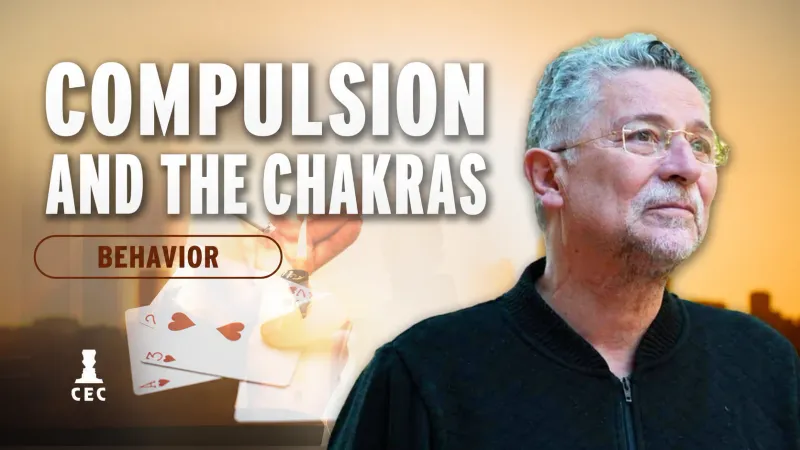
Compulsion begins in the base chakra and intensifies in the spleen chakra, driving people to act to avoid anguish, which is merely postponed. The pleasure it offers, similar to that of a drug, makes change difficult. To dismantle this process, one must truly want to change, acknowledge the difficulty, and investigate its root in the unconscious, which operates independently of the will. Some therapies can alleviate the problem, but superficial methods do not resolve it. A coherent learning process makes doing what is right pleasurable, and liberation requires moving beyond emotional reactivity to reach feeling, which is genuine and cares about others.
Source transcript
The noise I hear seems to come from the mind. I am developing essays on compulsion, analyzing the compulsive processes a person may have. Compulsion begins in the glow of the base chakra, like a spark, and then intensifies in the spleen chakra. The latter takes command, causing the person to act on the compulsion to avoid anguish, although this only postpones the anguish.
To resolve emotional issues, it is essential to understand how they work. Otherwise, we remain reactive and irrational, perceiving only the effects. Facing and acknowledging the difficulty is crucial to begin dismantling it. This process dates back to the beginnings of each one of us and cannot be resolved with superficial methods. Some therapies may alleviate it, but the real solution lies at the root of the problem.
The unconscious operates continuously, regardless of our will. We need to explore the "basement of consciousness" to understand and dismantle this machine. Compulsion, especially when linked to sexuality, can become unhealthy and uncontrollable. A man with a sexual compulsion, for example, sees sex in any woman—and the same occurs with women who have this compulsion.
Resolving this requires a genuine desire, because compulsion offers pleasure similar to that of a drug, making it difficult to break free. The solution, however, brings freedom. The drives differ: the drive of discernment does not lead to ecstasy, while the drive of euphoria does. Coherent learning makes doing what is right pleasurable. Two men in a shopping mall may react differently when they see a woman: one may react compulsively, while the other sees her simply as a person. This depends on the intensive training that leads us toward our preferred forms of pleasure. Freeing oneself from this requires a sincere search to move beyond emotional reactivity.
We must transcend emotion, which is reactive, and reach feeling (above the heart chakra), which is genuine and cares about the other person. Compulsion resides in a very restricted space within our being and needs to be resolved, because it has concentrated power. Honestly analyzing one's life is essential, since pleasure and pain are always together.
Questions raised by this material
- How does compulsive behavior work?
- Why is it so hard to overcome a compulsion?
- What is the difference between emotion and feeling?
Keywords
How to cite
Esagüi, M. (2024, June 20). Compulsion: How It Works, the Chakras Involved, and the Challenge of Change [Video]. Center for Consciousness Studies. https://centrodeestudos.org/en/library/compulsion-how-it-works-the-chakras-involved-and-the-challenge-of-change/