Give & Receive Energy

Summary
Knowledge does not always follow a scientific or academic path, and its pursuit should promote happiness without arrogance or reinforcement of the ego. Repeating experiences, including during astral projections, does not guarantee absolute truth, because our ability to evaluate also needs to be verified, taking into account the differences between physical senses and spiritual perceptions. Evaluating, questioning, and researching information, including information from Moisés, can reduce the margin of error without making anything conclusive.
Source transcript
This conversation with myself is a reflection on everything around us. Today I hosted the Out of Body program, and afterward we had a short meeting to organize ourselves and see what we could improve. I think people need to grow and become better, but I do not think that path is necessarily the path of scientific knowledge. Although I greatly value research, I think its paths often do not follow the academic path, because many experiences have always been carried out differently from the scientific methodology we created.
The path should be one of happiness, without arrogance or reaffirmation of the ego, stripping our existence of the frills created along the way. I have been learning, taking notes, and testing within the realities of life—within my own realities. Conclusions may or may not be very tangible, but I see knowledge as fundamental. A form of study needs to remain open to both mistakes and successes. When something works repeatedly, we suddenly sign our names under the claim that it is true; I know from my experiences and failures that it does not work that way. In astral projection work, even an event observed one, two, three, four, or five times may not be happening as it appears, because our ability to evaluate should also be verified. I do not think anything is conclusive, although it forms part of knowledge, and I do not know whether I am expressing myself properly.
Experiences of the physical world, spirituality, or subtle dimensions cannot be considered absolute truth because we do not perceive what we are in full. With our senses embedded in the physical body and the great difference in spiritual perceptions, we need to understand that gap before evaluating. Assessments are necessary and may reduce the margin of error, increasing the safety of the search. On social media, some information is more coherent and some less so. That includes mine: I am neither right nor the truth. We need to evaluate, question, and research in order to use the knowledge or not, without reducing everything to our convenient easy-life ego.
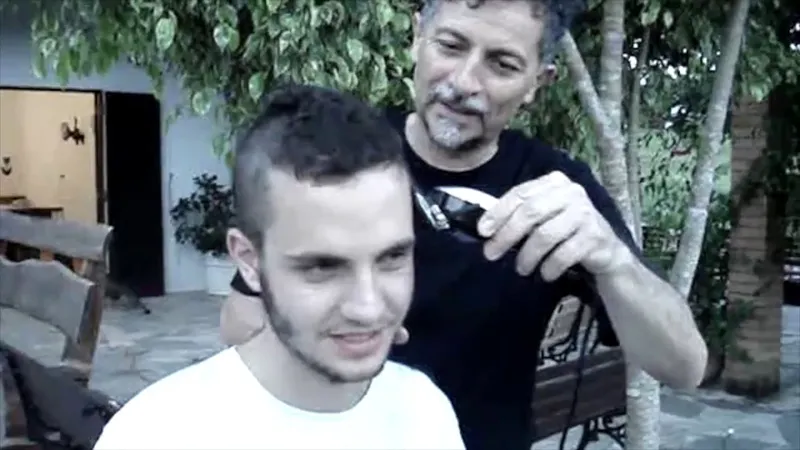
I noticed a large black bird, somewhat exaggerated in size. With the CEC team, I am producing Sinfonia do Infinito to honor Minhoca's work. He is a filmmaker who lives alone on a small farm, works in agriculture, and wants a very simple life. I found a scene in which I appear cutting his hair and wanted to place it after the video. The footage is from São Damião on February 13, 2010, at 7:49 p.m.; Rafa says he almost lost his ear twice. I learn things, including how to cut my own hair, to make life increasingly tangible. I have cut several people's hair when they asked, trying to do my best and learn—not to practice a profession, but to take care of myself and become independent.
Questions raised by this material
- Does spiritual knowledge need to follow the scientific method?
- Does repeating an astral projection experience guarantee that it was interpreted correctly?
- How can you evaluate information about spiritual experiences?
Keywords
How to cite
Esagüi, M. (2017, December 12). Conversations with myself - (3) - The path of knowledge does not always follow the scientific path [Video]. Center for Consciousness Studies. https://centrodeestudos.org/en/library/conversations-with-myself-3-the-path-of-knowledge-does-not-always-follow-the-scientific-path/