Give & Receive Energy

Summary
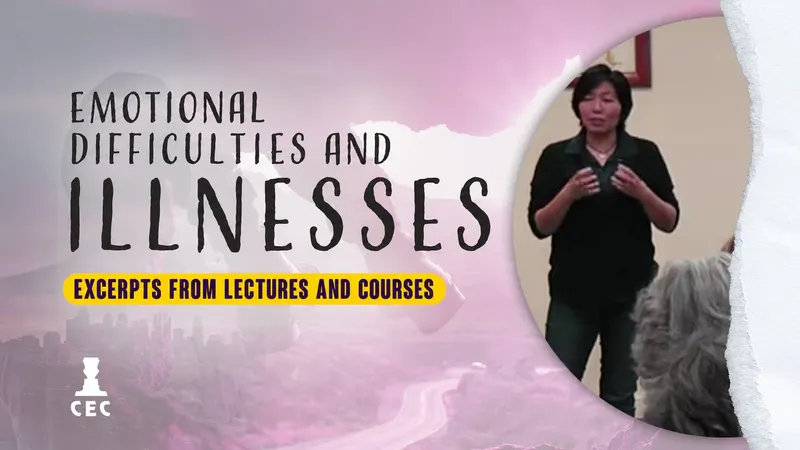
Emotional difficulties that have not been worked through can cause blockages in the chakras and diseases such as cancer, and a study links difficult childhoods to health problems. When all meaning in life depends on external circumstances, losing them can lead to illness. Inner change can be painful, but without it, new illnesses can develop even after medical treatments. Nonjudgmental self-analysis helps people recognize emotions and shortcomings, identify what brings satisfaction, and make changes. Elevating consciousness broadens perception limited by negative emotions and makes it possible to find solutions to problems previously considered unsolvable.
Source transcript
A situation of frustration, divorce, loss, or grief that we are unable to work through can, years later, manifest as cancer. Some people develop other illnesses, such as a heart attack, hypertension, or diabetes. Each individual deals with emotional difficulties in a unique way, resulting in different energy blocks and alterations in the chakras, which can lead to various pathologies.
Generally, we begin to present uncontrollable illnesses or pains, such as low back pain and arthritis, which often have an emotional origin. A study with 17,421 people showed that children who faced difficult childhoods were more likely to develop cancer, heart disease, depression, high blood pressure, and diabetes, as well as being three times more likely to become smokers and to attempt suicide.
When we exteriorize strong energies, such as anger and hatred, we do not direct them only at others, but also keep them inside ourselves, causing blocks and deconfigurations in our chakras. This raises the question: is our life on Earth meaningful? A book on the subject by Lawrence LeShan explores personality characteristics that predispose a person to cancer. People who place the entire meaning of their lives in external situations, such as a marriage, can have the ground pulled out from under them when those situations end, resulting in illnesses.
The book recounts stories of people who overcame their difficulties and others who, even while aware of their problems, chose not to change because making the change was too painful. Often, necessary changes are difficult and demand effort, especially when we are used to certain behaviors. It is important to share this knowledge, because many patients do not resonate with the idea that their illnesses may have emotional roots. Despite medical treatments such as surgery, chemotherapy, and radiotherapy, if the person does not change internally, new illnesses can arise. Greater work is needed to change the way people think about emotional, spiritual, and global health.
Reflecting on emotions such as anger, hatred, envy, fear, frustration, anxiety, and guilt is essential. We need to look at ourselves, to see ourselves, and to accept our failings in order to bring about changes. It is not a matter of judging ourselves, but of identifying what we can improve in order to be happy.
We should carry out a self-analysis, identify what brings us satisfaction and where we want to get to in different aspects of life, such as family, health, and profession. Gianni, for example, was capable of using all the frequencies of the crown chakra, which allowed him to see the world broadly. As long as we are trapped in negative emotions, we will see the world in a limited way. By raising our consciousness, we can find simple solutions to problems that previously seemed insoluble, broadening our perception of ourselves, of others, and of the environment. That is the goal we should aim for.
Questions raised by this material
- How can unprocessed emotions affect health?
- How does self-analysis help with negative emotions?
- How do negative emotions limit our perception?
Keywords
How to cite
Fukuyama, É. (2015, May 6). Emotional Difficulties and Illnesses [Video]. Center for Consciousness Studies. https://centrodeestudos.org/en/library/emotional-difficulties-and-illnesses/