Give & Receive Energy

Summary
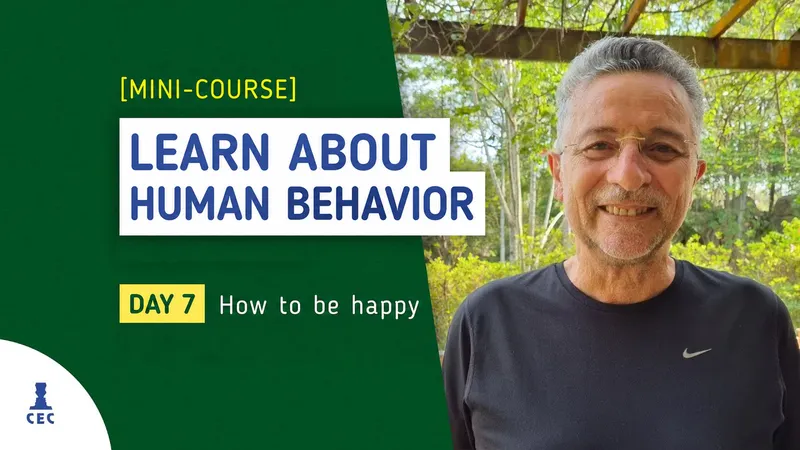
Happiness is already present and needs to be recognized rather than treated as an obligation. It is grounded in relationships with oneself and others, the desire to achieve goals, and a daily review of one's own life. Neediness can interfere with these relationships because of the expectation that the other person will meet one's personal needs. Conversation should be a healthy exchange, without domination or manipulation. Being happy means being at peace with oneself, doing what one enjoys without harming anyone, and acting with feeling. This does not depend on another person, age, or health, but involves inner order, dedication, responsibility, adjustments in the face of difficulties, and gratitude for life.
Source transcript
Happiness is a crucial subject in our lives, because we spend years looking for it. I believe that happiness has been with us for a long time; we only need to recognize it. Being happy should not be a commitment, but rather a discovery. The most important factor for happiness is relationship. It is the basis of all the happiness we can have, both with ourselves and with others around us. Analyze how you relate to yourself: are you good-humored, positive, do you seek the well-being of others? It is essential that we review our life daily in order to organize ourselves and accomplish what we desire.
Will is fundamental to reaching our goals. With will, we can accomplish anything, regardless of schooling or other circumstances. The relationship with others is crucial; we cannot be ill-humored or treat people badly. Once, at home, a hive formed in the electrical box. When I went to check, hundreds of bees climbed onto me and my face. I stood still and then walked away, and the bees moved away without stinging me. This illustrates that we can relate to anything, even to bees.
Relating well is crucial to happiness. If we cannot relate to our children, our parents, or our spouses, we do not produce good things. Neediness can get in the way of our relationships, because we expect the other person to meet our needs. Happiness is being at peace with yourself, doing what you like without harming anyone, and acting with feeling in your heart.
Talking with others should be a healthy exchange, without domination or manipulation. Learning from those who know more and teaching those who know less is fundamental. Our life may last 60, 70, 80, 90, 100 years or more, and at the end we should have a positive summary. If we accept spirituality, our story should be told in a happy way. The intention of life should be one of happiness, energy, and motivation, without blaming others for our failings.
We should not depend on anyone, emotionally or financially; it is possible to find a better path, regardless of age or health. We should not use illness as an excuse for unhappiness. Happiness is inner organization and the pursuit of good things, without limits. Desires should be expanded, and we should act with dedication and attention. Be proud of what you do, without deceiving yourself or others. Being happy is expanding joy, energy, light, and love, accepting life and ourselves. If there are difficulties, it is necessary to review and adjust.
Wake up with will, charged with light and energy, appreciating the sun, the moon, the landscape, and people. Recognize everything you have and learn to be thankful to life. Start by thanking yourself for everything you are and for everything you are not. Give thanks. Everything around us is a moment, a wonderful experience that should be enjoyed. If you are ill, you can transform that illness into happiness. Often, we get sick because we do not know how to be thankful for the illness we have. Do you remember Francis? He was thankful for everything around him. Although he did not live as long as he should have, the time he lived was enough to accomplish everything he wanted. We may live a long time and perhaps do little.
Questions raised by this material
- How do relationships influence happiness?
- How can I cultivate happiness in everyday life?
- How does neediness harm relationships?
- How does gratitude contribute to happiness?
Keywords
How to cite
Esagüi, M. (2013, May 29). Mini-course Learn about Human Behavior, Day 7 - How to Be Happy [Video]. Center for Consciousness Studies. https://centrodeestudos.org/en/library/mini-course-learn-about-human-behavior-day-7-how-to-be-happy/