Give & Receive Energy

Summary
Dissatisfaction with a job that conflicts with one's beliefs and principles can be a form of self-harassment: the dense energies it generates feed consciousnesses that try to keep the person unhappy and make changing jobs more difficult. This dissatisfaction also affects personal and family relationships, since work gives structure to life. Reassessing job satisfaction and seeking changes, even if that means earning less, can ease fears and insecurities. Adaptation is essential for survival and personal evolution.
Source transcript
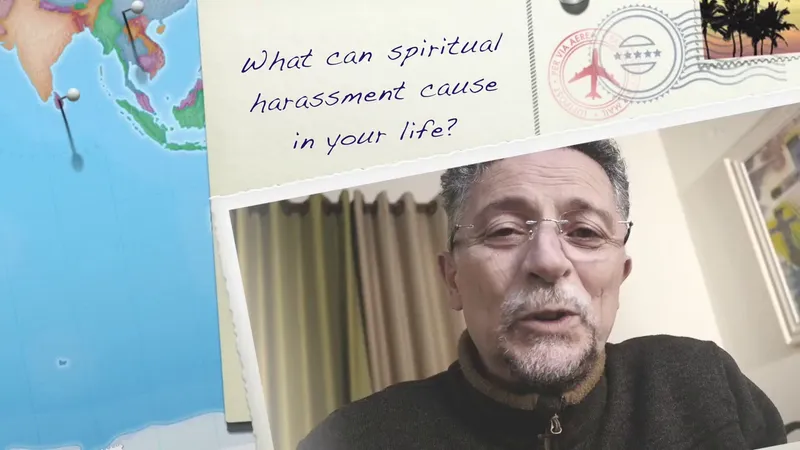
Spiritual factors, such as harassment, can impact our professional life in various ways. I do not present this as a rule, but as an approach for thinking about the subject. Working at something we like generates positive energies, while working at something we do not like creates unpleasant, conflicting, and defensive energies. This dissatisfaction can be seen as self-harassment, since you yourself generate that negative energy.
When we are dissatisfied with our work, the consciousnesses that feed on dense energies—such as fear, dissatisfaction, hurt, resentment, and envy—take advantage of that situation. These energies serve as sustenance for those consciousnesses in the spiritual dimension. Therefore, it is crucial to evaluate how much we like what we do and how satisfied we are with our professional activity.
You can perform a simple task and feel satisfaction, or work at something sophisticated and feel unhappy. This happens when the work goes against your beliefs and principles, generating unhappiness and a high expenditure of energy to maintain your inner position. Work is the column around which we build our life and acquire and maintain things; if it fails, this negatively affects our family and personal relationships. Dissatisfaction is reflected in a facade smile, which is not healthy.
The consciousnesses that feed on this unhappiness do everything so that you remain in that situation. Many times, we feel a barrier when trying to change jobs, even when there is a better offer. This happens because those consciousnesses cannot follow movements of change and remain in the being's area of laziness, feeding on the energies of those who make some effort, because they themselves do not want to make an effort—they want to eat without working.
Change can be difficult, but it is necessary in order to reach happiness and to win a better space in life. The consciousnesses that get in our way do not act only in the professional area, but also in affective and family relationships. The same job can be very fulfilling for another person: dissatisfaction with it is a personal question, and we need to resolve it in order to walk without barriers and relieved of ourselves.
It is important to review whether we like our work and, if not, to seek changes in order to free ourselves from self-harassment and from the fears, doubts, and insecurity we feed. Many times, changing jobs, even to earn less, can deeply relieve our life. Adaptation is fundamental for survival and evolution: it is not the most intelligent one who survives, but the one who manages to adapt. This is part of our growth and personal evolution.
Questions raised by this material
- How can job dissatisfaction contribute to spiritual harassment?
- Why can spiritual harassment make it harder to change jobs?
- Why can changing jobs alleviate self-harassment?
Keywords
How to cite
Esagüi, M. (2014, June 12). Spiritual Factors - How spiritual harassment affects our professional life [Video]. Center for Consciousness Studies. https://centrodeestudos.org/en/library/spiritual-factors-how-spiritual-harassment-affects-our-professional-life/