Give & Receive Energy

Summary
A lack of emotional education and disconnection from the body make it harder to recognize what we feel. Emotions affect the body and chakras, potentially causing physical symptoms or promoting well-being; posture and facial expressions also influence mood and memory. Emotions are instinctive brain reactions linked to the navel chakra, while feelings develop through awareness, from the heart chakra upward, and are more stable. Observing the body, breathing, and emotions helps change automatic patterns and supports spiritual evolution; even without the physical body, consciousness continues to feel and act through other vehicles.
Source transcript
We are a complex of many interconnected dimensions. Body awareness is crucial to our evolution. We often think we can identify our emotions, such as anger, joy, and sadness. However, these are the most basic ones. Can we really perceive all the nuances of our emotions? Often, we cannot. We lack an adequate vocabulary to name them, and this is due in part to a lack of emotional education.
In Western society, we give more importance to the intellect than to the body and emotions. At school, children have no space to express what they feel; at home, they often do not either. This creates a vicious cycle in which we do not know how to identify or name what we feel. Another issue is our disconnection from the body. Although we inhabit this body in order to evolve, we are often distant from it. We notice the body only when we feel pain. For example, we notice the importance of a finger only when we injure it. Likewise, we cannot identify where emotions are acting in the body unless they are very noticeable, such as tightness in the chest or a lump in the throat.
As consciousnesses, we incarnate life after life, but each new incarnation places us in an infant body with a nervous system that is still developing. This limits our perceptive capacity, especially during childhood. At birth, the child needs to relearn the basic sensations of life, such as hunger, pain, and discomfort. Initially, these sensations are simple, but the nervous system is not yet fully developed. As we grow, many of us continue to be unable to identify clearly what is bothering us, whether it is fear, pain, anguish, anxiety, anger, or frustration.
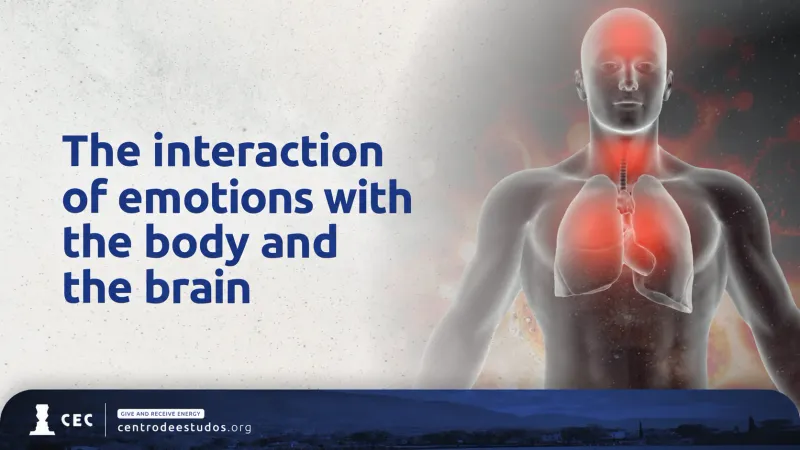
Many people report the sensation of a lump in the throat, known as "globus pharyngeus," a common symptom that leads to physical examinations, such as throat endoscopy, ultrasound, and thyroid evaluation. However, difficulty expressing feelings and thoughts sincerely and calmly may be the true cause. We often avoid expressing what we feel for fear of rejection or another person's anger, developing defense mechanisms that block expression. This can cause energy blocks, especially in the laryngeal chakra, which is responsible for communication.
Another common sensation is tightness in the chest, frequently associated with anguish, hurt, and intense anger. Although there is not always a physical cause, these emotions can manifest physically, as in cases of coronary artery disease or heart attacks. One of my patients had Takotsubo syndrome, in which the heart changes shape after intense emotional trauma, resembling a small pot used to catch octopuses in Japan, but returns to its previous shape after the emotion is overcome. This illustrates how emotions can materialize physically.
In the energetic context, emotions such as fear also affect the chakras. In situations of fear, there may be an exteriorization of energy as a form of defense, involving chakras such as the spleen chakra or those in the leg joints and causing physical symptoms such as weakness or cramps. When I began driving, I felt afraid and, consequently, had a stomachache before getting into the car to go to the office. This demonstrates how emotions interact with the body, influenced by brain reactions that release substances into the organism.
Neuroscience suggests that we have two more senses in addition to the traditional ones, and emotions, whether good or balanced, also affect the body and may promote healing. Emotions are felt, but are also connected to our thoughts and to how we perceive and interpret the world. They also have to do with our culture and are a composite of various influences, and positive emotions, such as joy, are beneficial to the body, health, and well-being.
There is a difference between emotion and feeling. Put simply, emotion is an instinctive brain reaction to stimuli, whether from the environment or thought. It is an automatic response outside our control. Feeling, on the other hand, is more developed, occurring in another part of the brain and related to awareness and the ability to give new meaning to experiences. For example, when we feel sadness, the emotion triggers various reactions in the body. Feeling, in turn, is the interpretation of the situation experienced, the personal experience.
At CEC, we distinguish feeling from emotion. For us, feeling is connected to the chakras above the heart chakra, which are considered nobler and less subject to emotional fluctuations. These are feelings that we develop with awareness: appreciation, affection, solidarity, fraternity, eventually reaching love and acceptance. Emotions are associated with the navel chakra, while we generate feelings from the heart chakra upward. This is the CEC view.
Traditional psychology does not consider chakras, which can make the understanding of emotions and feelings more confusing. In conventional science, emotion and feeling often blend together. Understanding how the chakras function and the quality of the energies produced helps clarify this distinction. For example, euphoric joy, which is an emotional peak, is fleeting and nonlinear. Contentment, a constant and peaceful joy, is more closely related to the energies from the heart chakra upward and is considered a feeling. The feeling of peace is a clear example, contrasting with anxiety, which is a disordered emotion. Peace is a deep and stable feeling.
Neuroscience currently considers two additional senses beyond the traditional five: interoception, which consists of information from inside the body, and proprioception, which consists of external information. The brain responds to external stimuli such as gestures, posture, and facial expressions. The brain prioritizes certain areas of the body, such as the face, hands, and curvature of the body. The hands, for example, are essential for survival, and the little finger has one hundred times more neurons associated with it than the entire back. The brain interprets the face and activates mechanisms according to the facial expression.
An experiment showed that people who simulated a smile with a pen in their mouth perceived images as more pleasant, demonstrating that facial expressions can influence emotional perception. This perception can be used to improve mood. When we force a smile, the brain activates substances that promote joy. This also occurs when observing smiling faces, which activate positive mechanisms, improving memory and creativity. Body posture also reflects emotions. Depressed people tend to have hunched shoulders and a downturned mouth. Awareness of this relationship makes it possible to change attitudes and improve well-being.
The spirit feels emotions even without the physical body. Spirits attune themselves to our emotional energies. Knowing how the physical body functions helps in spiritual evolution. Even without the physical brain, consciousness continues to act through other vehicles, such as the astral body and the mental body. Understanding habits and automatic patterns of the physical brain is useful for modifying behaviors and evolving.
Attention to the body and emotions is crucial. Observing posture, facial expression, and breathing helps prevent automatic behavior and promotes personal growth. Neuroscience shows that posture influences memory and emotional perception. People who are hunched over remember fewer words and tend to remember more negative words. We live in a world where we are constantly hunched over screens, which may negatively affect our mental health. Knowledge should be an ally in personal growth. Reflecting on the time we spend hunched over and seeking to open the chest, both physically and energetically, may bring significant benefits. This reflection is essential for using knowledge as a resource for personal and spiritual development.
Questions raised by this material
- How do emotions affect the body and chakras?
- Why is it difficult to identify your own emotions?
- What is the difference between an emotion and a feeling according to CEC?
- How do posture and facial expressions influence emotions?
- How does observing the body help with spiritual evolution?
Keywords
How to cite
identificada, C. C. N., & Fukuyama, É. (2023, March 28). The Interaction of the Emotions with the Brain and the Body [Video]. Center for Consciousness Studies. https://centrodeestudos.org/en/library/the-interaction-of-the-emotions-with-the-brain-and-the-body/