Give & Receive Energy

Summary
Losing people, relationships, or possessions causes sadness, but the intensity of suffering varies according to attachment, neediness, and beliefs. Grief has a course and, when it continues indefinitely, can turn the loss into trauma. Suffering cannot be stopped by decree or with palliative solutions. Becoming one's own reference point, seeking knowledge, organizing oneself internally, and revising closed beliefs help one understand the loss and continue on one's path. For spiritualists, death is a transition, a perception that can make the situation calmer. Reflecting on one's emotional condition does not mean passively accepting the loss or failing to seek solutions.
Source transcript
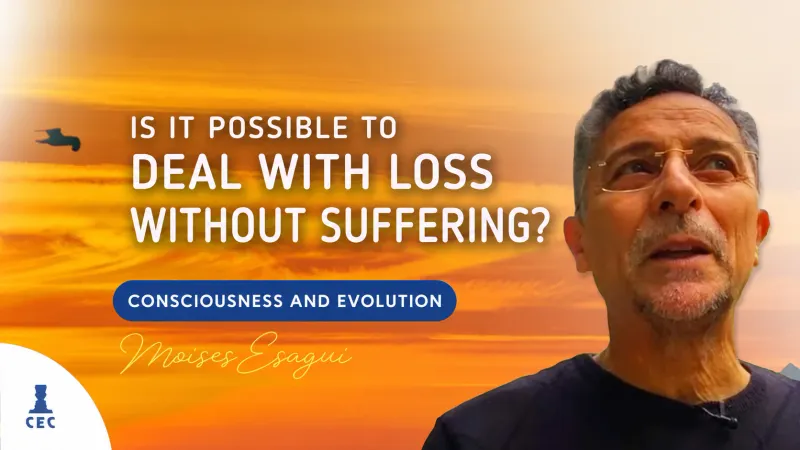
Is it possible to deal with losses without suffering? Situations such as energy depletion and difficulties in relationships require understanding. For example, when someone will not stop talking and ends up draining your energy, that is a type of energy vampirism. In order to come out of suffering, it is necessary to be our own reference point. It is not possible to stop suffering merely by decree or through devices such as drugs or other palliative solutions, which can make the situation worse. The way to deal with losses in a healthy manner involves understanding how neediness and emotional charges influence grief.
Consider loss in a relationship, such as the breakup of a dating couple. If one of the partners leaves the relationship, the other may enter grief, because the partner was a reference point. In a marriage, if one of the spouses dies after years together, the survivor loses an important reference point. This emotional space can be better or worse depending on how we deal with our neediness and our needs.
In order to deal with losses without suffering, it is important to understand that grief has a course. Healthy grief used to be considered six months to a year, but that has changed. Endless grief can become pathological, turning the loss into a trauma. Therefore, it is essential to learn to deal with these situations in a healthy way. Let us imagine that you have a very great attachment to a person. Life without them becomes difficult, because wherever you are, that person will be present in your thoughts and in your imagination. This is a significant challenge for a human being. It is not possible to simply remove that figure from your life just because they are not physically present. Some losses are extremely painful, and that is an undeniable truth.
I believe we were trained to learn how to deal with life, but not to detach from it. We know that we are born, we live, and we die, but dealing with the loss of someone we lived alongside for a long time is not easy. I have heard from some people, especially couples, who, when speaking about their partner, express the wish to die right after losing them. This shows a level of dependence and of relationship in which the person cannot cope with the absence, because the other occupied a significant space in their life.
That is why it is crucial that each of us be our own reference point. We must learn and deepen our knowledge and our internal organization so that, when we face a loss, we understand what is happening. I consider this a very serious matter. Some people are extremely important in our lives, which makes losing them very difficult. I have been through significant losses, such as that of a son, my mother, and my father. I had a very strong relationship with my mother, who was fun and had a spiritual connection that allowed me to discuss these subjects with her.
On the other hand, it is necessary to understand that we will not be able to make it turn into eternity. We must be our own reference point in order to continue on the path of life, even after a significant loss. Otherwise, we may feel destroyed and unable to move forward. To avoid that suffering, we must become our own reference point. For this, we need to acquire knowledge and enlightenment beyond the limiting beliefs that surround us. Increasing knowledge and tearing down beliefs are essential steps. Depending on what we believe, the suffering can be greater. If we do not believe in the continuity of life, the loss is definitive. For spiritualists, death is only a transition.
Even if that argument serves only to bear the pain, it is important to have that perception. Knowledge and the revision of beliefs are fundamental for us to move forward; otherwise, the suffering can perpetuate itself or intensify. It is crucial to reflect on this. We are discussing whether it is possible to deal with losses without suffering. One way is to seek knowledge and enlightenment, and another is to abandon closed beliefs. In addition, it is important to understand what happens emotionally when we face a loss, whether of a person or of a possession. That emotional loss is proportional to the attachment we have.
Think about this: you have three items to analyze. When something of yours is taken, you enter a process of grief, because any loss produces grief. How do you react? The first idea is to assess how attached you were to that possession. We are not saying that we should accept everything without questioning it or looking for solutions, but rather that we should reflect on your emotional condition. Loss is always sad, never happy. If you are robbed and they take your car, you will not be happy, but how much will that make you suffer?
Some people simply think: "They took the car, but I have insurance; now I just need to collect the money or buy another car." Their suffering is not that suffering of a loss out of attachment, in which the person loses something that, to them, was a part of themselves. It is quite different. It is important to reflect on this, because our emotional lumps can greatly disrupt our life. It is a good idea to follow a path of liberation, which improves our life. This path has a cost: effort and the understanding of things. It is different to lose a relative and understand life after death, or not to believe in that. These are two distinct situations: one calmer, with spiritual knowledge, and another closed, unacceptable. We need to be attentive to these matters.
Questions raised by this material
- How does being your own point of reference help you cope with loss?
- Why does attachment make loss more painful?
- How do beliefs about death affect grief?
Keywords
How to cite
Esagüi, M. (2013, December 24). Is It Possible to Deal With Loss Without Suffering? (Consciousness and Evolution Program) [Video]. Center for Consciousness Studies. https://centrodeestudos.org/en/library/is-it-possible-to-deal-with-loss-without-suffering-consciousness-and-evolution-program/