Give & Receive Energy

Summary
Jealousy is an immediate emotion, while feelings are formed over the course of a lifetime. It arises from the perceived threat of losing affection or attention, not from the loss itself. Neediness intensifies it, and a lack of emotional and psychological maturity fuels distrust. This reaction can restrict the other person's freedom and escalate into obsession or violence. Expressing your distress can resolve jealousy if the other person has common sense, but you need to understand your own reaction and seek relationships based on trust. If you cannot resolve it within yourself, it may be better to avoid relationships that cause suffering.
Source transcript
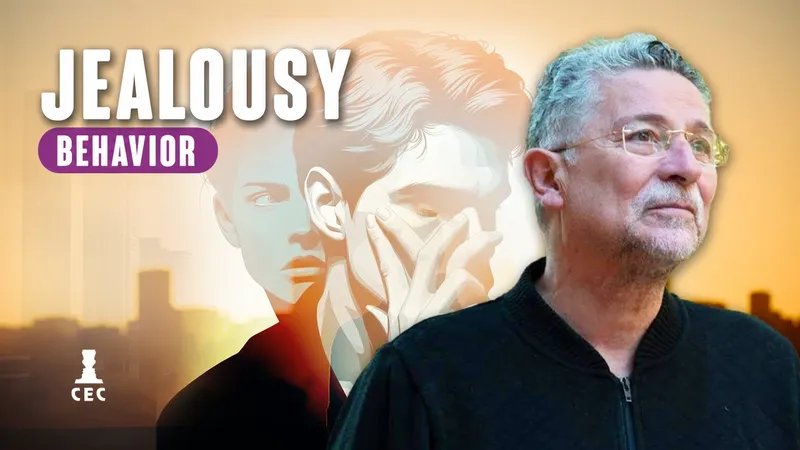
Jealousy affects humanity, beginning with couples, extending to friendships, and reaching everywhere. Explaining jealousy is not simple. Some people associate jealousy with caring for another person. However, I do not consider jealousy a feeling, but an emotion. To me, feeling is a different level in our psychic architecture. Jealousy is a reaction; it does not have much logic. It arises from a perceived threat connected to loss. It is not loss itself, but the threat of loss that arouses jealousy. Jealousy may range from a mild to a severe level, depending on the intensity of the perceived threat of loss, such as losing affection or attention. If a person is very needy, jealousy can become unbearable.
A jealous person's reaction may be to express their feelings, saying, "I feel jealous of you with this person or activity because it causes me suffering." If the other person responds sensibly, the jealousy can be resolved. However, intense jealousy can lead to physical and verbal aggression, and even extreme acts such as homicide, because of the feeling of betrayal and neediness. Neediness is a somewhat sick way of life. We learn that we need someone by our side, that a man should have a female partner and a woman a male partner. This creates bonds that can immobilize the other person, because jealousy prevents the person from having freedom, generating a sense of betrayal if something happens outside their sight.
Jealousy is an immediate emotion, not a feeling. Feelings, such as love, are built over the course of life. There is no such thing as an instantaneous feeling. Emotions are immediate reactions. This view can be questioned, and I am open to learning more about the subject. Jealousy can become obsessive, especially after specific events. For example, if a wife sees a female friend looking at her husband and interprets it as a suggestive advance, an idea of betrayal may arise even if nothing is happening; a call from the friend to chat with the husband already causes confusion. This emotional context needs to be resolved because it can become an obsession that causes constant suffering.
It is important to stop and reflect on the reason for the jealousy. Without emotional and psychic maturity, everything around you will be a threat and a source of suffering. Even compliments or gifts may be viewed with distrust. Understanding how jealousy works is essential to living happily, because it leads to an unhappy life of suffering.
If jealousy cannot be resolved internally, perhaps it is better not to become involved in relationships that cause suffering. We should trust people and seek those we can trust. We usually seek people similar to ourselves, but it is important to recognize that the other person may have similar or opposing characteristics, creating inner conflicts. Jealousy is not a good idea, and we need to learn about it to avoid suffering that we create. It is important to be more expansive and come out of the defensive shell we have created, seeking a happier life with more space.
Questions raised by this material
- Is jealousy an emotion or a feeling?
- Why do we feel jealous?
- How can you deal with jealousy?
Keywords
How to cite
Esagüi, M. (2024, May 17). Jealousy (Human Factors) [Video]. Center for Consciousness Studies. https://centrodeestudos.org/en/library/jealousy-human-factors/