Give & Receive Energy

Summary
Healthy close relationships depend on dialogue, self-knowledge, and adjustments that respect each person's background and differences, without imposing expectations created by emotional neediness. This balance requires everyone to be willing to change, and behavior can be improved through self-analysis and facing oneself. Direct contact with the spiritual dimension, without intermediaries, broadens understanding of life and makes room for new spiritual relationships.
Source transcript
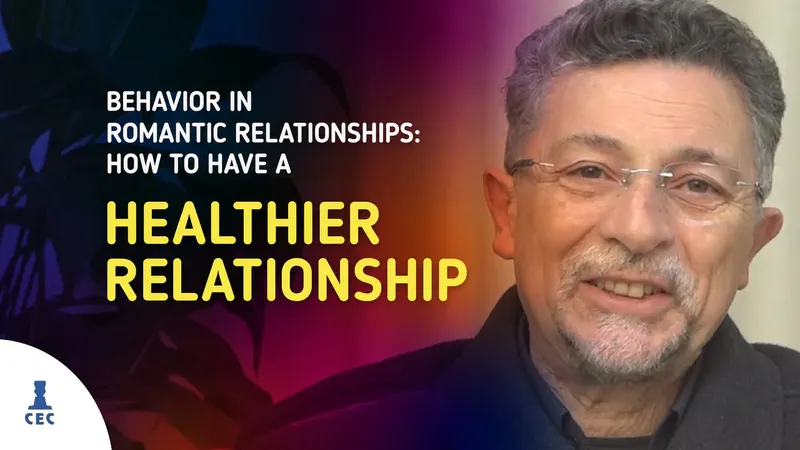
Human behavior in affective relationships is a subject of great importance. From a certain age, when we begin a relationship with someone with the intention of building something meaningful, differences and difficulties arise. I wrote a book called "The Other," in which I identify personality types and how people act and react with one another. I analyze the internal context that makes a relationship better or worse, which is fundamental. At the beginning of a relationship, everything seems very good; we are in a state of euphoria that, most of the time, blinds us to who we truly are and what surrounds us.
To maintain healthy and lasting behavior, it is important that this behavior not lead us to illness, suffering, or the need to endure the other person. Having a relationship is wonderful, but it needs to be balanced. To achieve this, we must identify who we are and who the other person is. For us to live in the best possible way, it is essential to have extensive conversation.
I would like to share a remarkable experience with the psychoanalyst Dr. Nelson Posse. He had a well-structured personality and a morality that conveyed trust. I participated in group sessions with him that included about eight to ten people. In one of these sessions, one of the participants became indignant when she discovered that Dr. Nelson's wife, who answered her during a market research survey, was a short, chubby lady, contrasting with the image she had of him. During the session, she expressed her dissatisfaction, but Dr. Nelson calmly explained that his relationship was based on affection and mutual choice.
This situation taught me about the expectations we project onto others, often based on our own emotional neediness. We create an idealized image of someone, which can occur in any relationship, whether social, professional, spiritual, or familial. It is fundamental to recognize that each individual has their own needs and internal complexities. The story illustrates how affective relationships are influenced by personal characteristics, whether passive, aggressive, or assertive. For relationships to work, dialogue and adjustments are necessary, along with self-knowledge. Otherwise, we risk imposing our expectations on others, which is not healthy.
Astral projection and clairvoyance do not happen instantaneously; as with any skill, practice and improvement are necessary.
My greatest interest is for everyone to have the opportunity to see beyond, as astral projection enabled me to do, offering a different view of spirituality and the human being. A remarkable experience in my life occurred when, while still a boy, I found a magazine about Chico Xavier on the ground in a public square. The idea of a spirit entering someone's body frightened me. Over time, as I came to know him, I perceived his kindness, morality, and help for others, and he became a model for my life. The spirituality he practiced was intended to help people directly.
I believe that spiritual knowledge should be accessed without intermediaries. When someone talks about spirituality or incorporates a spirit, I respect each person's path, but I consider it different to experience the spiritual dimension and encounter a deceased loved one. Direct contact with the spiritual dimension expands our understanding of life and opens doors to new spiritual relationships.
Behavior is fundamental to human growth. In a family, if people do not relate well to one another, nothing works. Each person needs to learn to accept and respect the other, considering their histories and differences. Everyone must commit to changes, because without them, nothing works. Human behavior can be learned and improved through self-analysis and personal confrontation, making life happier.
Questions raised by this material
- How can I build a healthy, lasting romantic relationship?
- Why do we idealize people in relationships?
- How does astral projection change the way we view spirituality?
Keywords
How to cite
Esagüi, M. (2017, September 17). Romantic Relations: How to have a Healthier Relationship (Consciousness and Evolution Program) [Video]. Center for Consciousness Studies. https://centrodeestudos.org/en/library/romantic-relations-how-to-have-a-healthier-relationship-consciousness-and-evolution-program/