Give & Receive Energy

Summary
The chakras are linked to the aura, formed by the energies we take in and exteriorize and shaped by individual reincarnatory paths and experiences. The aura moves and influences interactions: we tend to assimilate other people's difficulties or qualities, and people with similar energies form a group egregor. Meditation and prayer can organize energies temporarily; daily spiritual practice fosters energy exchange and learning. Relationships can help, but growth and happiness require self-knowledge and personal effort. Living conditions influence this path without justifying inertia, and evolution can bring greater loneliness.
Source transcript
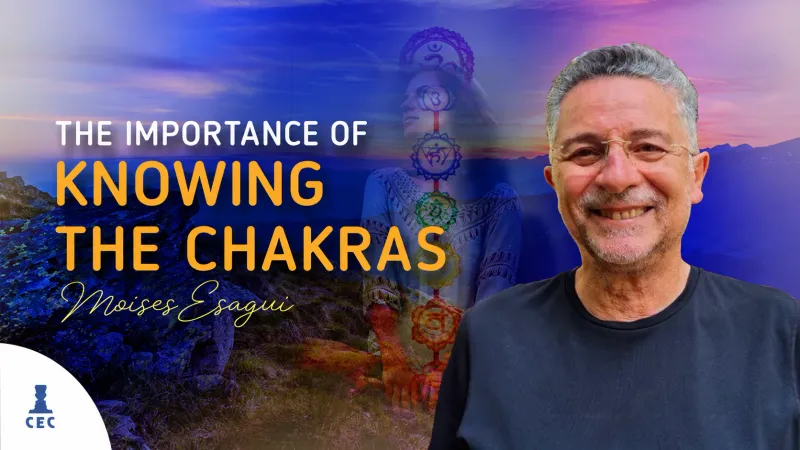
The seven main chakras are energy centers that are fundamental to understanding our existence, from birth to death. Some philosophies mention six, others five or even nine chakras; we consider seven for teaching purposes.
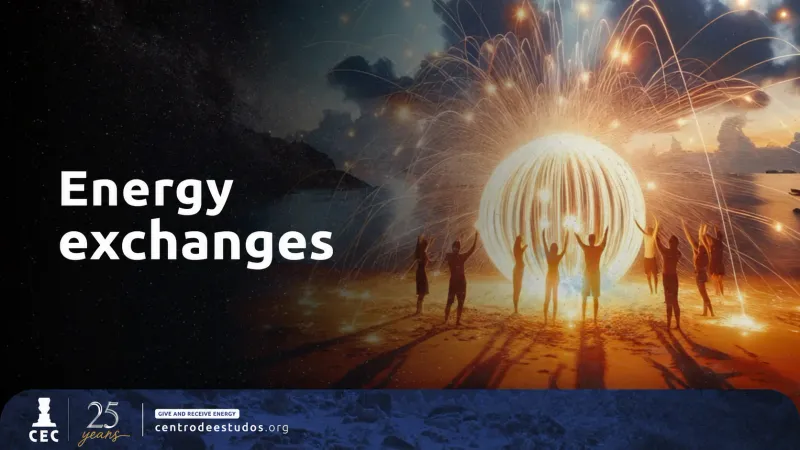
The chakras are intimately linked to our aura, which is formed by the energies we take in and exteriorize. The aura is our energetic signature, reflecting who we are. In contact with other people, we may feel comfort or discomfort, depending on the energy they emanate. Meditations and prayers can temporarily organize our energies. Our energies are the expression of what we are and they determine who we connect with. People who are disoriented or out of balance have an aura that reflects that, and others may feel physical symptoms around them.
The energy we generate influences our environment. In a fighting ring, the energy is intense and competitive; in a monastery, the energy is calm and meditative. The gathering of people with similar energies creates a group egregor, providing pleasure and comfort. Finding people who share our energies is like finding paradise, but personal effort is fundamental to growth. Those who make an effort move forward, while those who fall behind may feel envy or anger.
True happiness comes from knowledge and is an individual process. No one can give us that, although they can help. Over the course of life, we can choose to get involved with people who have a positive or a negative aura. Depression, for example, has varying levels and affects the energy of the person who has it. It is essential to seek self-knowledge and to understand our energies in order to live in a fuller and more conscious way.
The processes of assimilating characteristics are individual. When we live with someone who is facing difficulties, we tend to absorb those difficulties. In the same way, when living with a person who is cheerful, well-adjusted, and fearless, we end up assimilating those qualities, because we are immersed in that person's aura, which has greater circulation and is more energetic. It is important to be aware of this.
Spiritual practice should not be sporadic; daily practice brings energy exchange and learning. It is possible to practice spirituality while carrying out other activities, keeping a clear attention. Taking part in the spiritual world with sincerity is fundamental. Spirituality should be lived day to day, because we are spirits with physical bodies.
Many people have mistaken notions about the aura. I have been studying chakras for years and, although there is a lot of mysticism, knowledge about chakras and the aura can transform lives. The aura is not static; it moves and adapts as we move. Understanding the aura is essential to understanding our energies. Each person has a unique aura, the result of their reincarnatory path and life experiences. The aura varies according to the place of residence—for example, between people from the south and from the north of Brazil. We should not make people uniform, because each one has their own emotional charges and emotional pulses. Even if two people share characteristics such as nervousness or anger, their intensities and reactions are different.
Every human being seeks to belong to a group, but we are not all the same. There are many people committed to growing and making an effort. Disagreeing is part of growth, and everyone has the right to have their own opinions about spirituality and the aura. Some people have no interest in evolving. That may be the result of the reincarnation process, of upbringing, of the place of birth, or of living conditions. These factors have an influence, but they should not be excuses for inertia.
It is possible for two people to have lived in precarious conditions, but one of them manages to grow and evolve in every sense. Recently, there was a case of someone who was living under the bridge and, with the help of another person, graduated in law. That demonstrates effort and a warrior's posture, in contrast with someone who does nothing in the same situation. Although the external conditions may be similar, people are internally different. As we evolve, we tend to feel more alone. As we improve and rise, we move away from those who are behind. Those ahead can serve as a reference, but the path is individual and requires effort in order to reach a better, healthier, and happier condition, with knowledge that takes us somewhere.
Questions raised by this material
- What is a person's aura?
- How does being around other people affect our energies?
- How is the egregor of a group formed?
- Why does spiritual growth require personal effort?
- Why does each person have a different aura?
Keywords
How to cite
Esagüi, M. (2013, September 11). The Chakras and the Aura [Video]. Center for Consciousness Studies. https://centrodeestudos.org/en/library/the-chakras-and-the-aura/