Give & Receive Energy

Summary
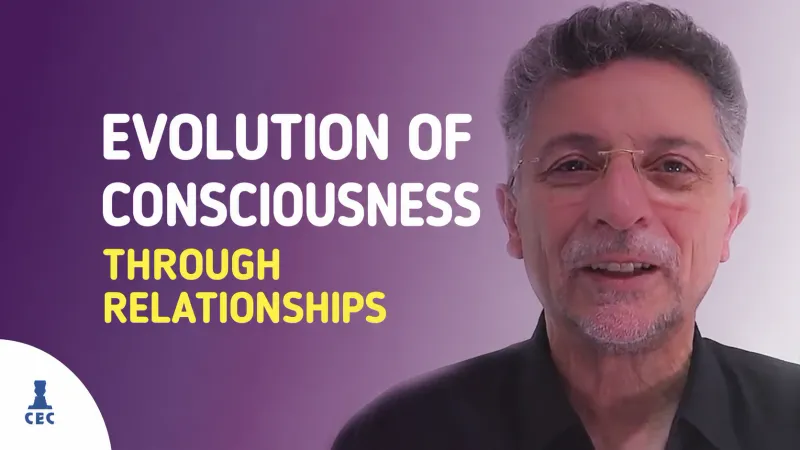
Consciousness evolves through relationships, which allow us to gauge maturity. Physical age does not guarantee this growth: living happily requires being emotionally unguarded and giving up the desire to take advantage of others. Collective emotional growth would make it possible to share everything without ego clashes and with mutual help. Inner knowledge should bring happiness and be applied and shared in the physical world. Our relationships also need to extend to everything that is alive and even to what seems inanimate, broadening our perspective and our care for the planet, which is our home.
Source transcript
The goal of liberation is to broaden our symbolic universe and to free us from dependencies. We should be like the sun, with more answers and understanding about our life and purpose. Human relations translate into energy through the emotions. Evolution occurs by means of relationships, which allow us to gauge our growth. Knowledge is important, but it must be positive, ennobling, and bring happiness. There are kinds of knowledge that lead us to the shadow—such as laziness and jealousy—while others lead us to the light—such as goodwill and quality relationships.
Relationships with ill-tempered and unhappy people are dense and disorganized. Those based on love and happiness, on the other hand, bring peace. The quality of our life is reflected in our behavior. Polite and smiling people turn big problems into small ones and are pleasant to live with. In relationships, we often act on impulse, without responsibility or coherence, which keeps us in the shadow of discernment. This happens at every age, not only in adolescence. Many people, even at 65 or 70, are still at an infantile stage of consciousness, judging and offending without clarity.
The cycle of the chakras reflects this: the base chakra lasts a year and a half, the spleen chakra lasts two years, two and a half years, or three with effort, and the navel chakra up to four years. After that, relationships need to be sustained by stories that we tell ourselves. Immaturity is the reason why many affective relationships do not work out. We evolve through relationships, learning to relate to ourselves and to others, but we often see everything in a self-serving way. There is a tendency to always want to win, as if our team had to be the one to win. Considering it acceptable to take advantage of a fellow human being is the end of the world. It is sad to maintain that attitude, because human relationship should be based on being emotionally disarmed. We need to be emotionally disarmed in order to live happily.
We should not see the other as different. Much is said about living with differences, but tolerating differences in order to survive is not maturity. If we grow emotionally, as a global civilization, we will reach a unanimous collective consciousness, in which everyone shares everything without ego disputes. I believe that utopia is something we have not yet managed to achieve, but that, once we reach it, stops being utopia. It is important to open the heart and to recognize that we are a sophisticated technology, perfect for the molds we know. We can do anything, as long as it is for good. We need to focus on good and on mutual help.
Relationships are fundamental. Even if someone becomes a monk and seeks inner knowledge through meditation, that learning is vertical, centered on oneself. Horizontal knowledge comes from relationship with others, forming a symbolic cross: vertical for inner knowledge and horizontal for sharing with the world. There is no point in knowing everything and not applying that knowledge in the physical world.
The universe is full of consciousnesses, and we are not the only ones. We need to relate not only to our fellow human beings, but to everything that has life, and even to what we think has no life. Francis of Assisi, for example, saw a stone as an element of building and of relationship a little over eight hundred years ago. He exchanged stones for prayers, carrying them in a cart, and he said as many prayers as were necessary for whoever contributed. There were cases of people giving 50 stones for 50 prayers; one sick person asked if he would say fifty.
Our relationship with the world is important, but we often have tunnel vision, a limited view. The narrower that view, the more violent and unhappy we become. We need to learn to relate to everyone, to resolve differences, and not to divide our home with fences that get in the way of our happiness and affection. Everything in life is learning and should be a step toward our being better. Suffering and happiness should lead us to growth and maturity. We need to live with tranquility, peace, love, and affection.
Contact and relationship with the immanent life of this planet are fundamental. This planet is our great brother. We call it Mother Earth, but all things in this world are our brothers. We need to treat them with great affection so that we can have this planet as our home for longer. Whoever takes care of their home can make it comfortable, cheerful, and happy, or begin to degrade it. The great idea of our life is to make this world better and better, because it is simply our good ship.
Questions raised by this material
- How do relationships contribute to the evolution of consciousness?
- How does emotional immaturity harm relationships?
- What is the difference between inner knowledge and learning through relationships?
- Why is it important to connect with all forms of life?
Keywords
How to cite
Esagüi, M. (2016, June 16). The Evolution of Consciousness through Relationships (Consciousness and Evolution Program) [Video]. Center for Consciousness Studies. https://centrodeestudos.org/en/library/the-evolution-of-consciousness-through-relationships-consciousness-and-evolution-program/