Give & Receive Energy

Summary
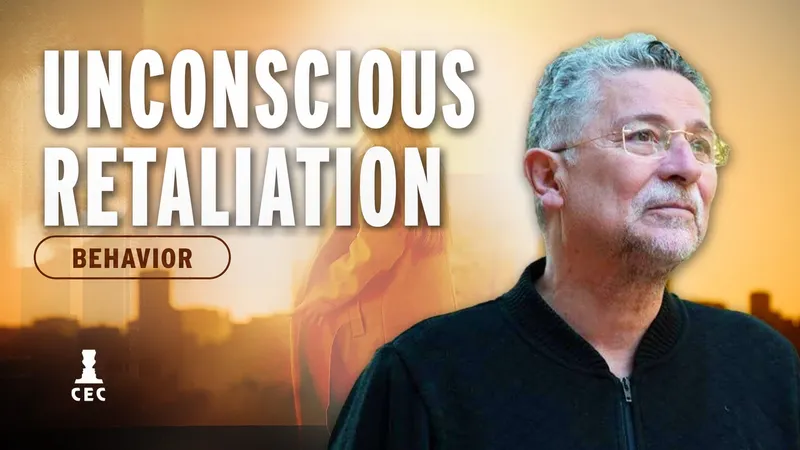
Unconscious retaliation is a defensive response common in passive or aggressive people, linked to accumulated emotional charges and difficulty expressing themselves clearly and without fear. When offended, people tend to retaliate for relief, often without noticing their reaction, instead of understanding and resolving what happened internally. Difficulties with people who represent emotional authority can trigger it in small everyday actions, although not everything is retaliation. Examining oneself helps prevent these charges from being discharged at inappropriate moments.
Source transcript
Human factors and unconscious retaliation. The excerpt is from my book The Other. Passive or aggressive people frequently practice unconscious retaliation, which is a path to worsening their dysfunctional condition and is based on the worst human emotions. Unconscious retaliation occurs when someone with a passive or aggressive attitude manifests defensive emotions such as anger, revenge, hatred, or resentment. Many people have this emotional content, but this is not normal. We need to review ourselves to avoid mood swings and the accumulation of emotional charges, which end up being discharged at inappropriate moments. Most people cannot express themselves clearly and without fear, resulting in retaliation.
These remnants of manifestation cause discomfort and dissatisfaction, acting on an unconscious level. Unconscious retaliation occurs when you react to another person, often without noticing, but it may have some participation of awareness. However, if it were fully conscious, it would not be practiced. I think there is no psychic situation without an internal response. When we are offended, we tend to retaliate in order to feel relieved, rarely understanding the moment and resolving it internally.
Difficulties with authority figures can generate reactions, large or small. This authority figure is emotional, not necessarily formal. Internally, the father may represent this authority, but it does not always work this way, leading to retaliation. For example, making food without affection or forgetting an appointment can be unconscious retaliation. I am not saying that everything is retaliation, but that it can be.
The people around us relate to us in emotional pulses. When there is sadness or a bad mood, retaliation occurs. An example: today, at a computer store, a salesperson who had previously been upset with me for asking questions about a product served me carelessly, possibly acting based on what he thought I had done to him. Unconscious retaliation happens constantly, often without our noticing. Some people become upset by what I say, accusing me of not understanding how to detect things, of being a liar or a fraud, even though I have not spoken against anyone. Retaliation is a defensive response to the environment, without clarity. Aggression is always defensive.
Questions raised by this material
- What is unconscious retaliation?
- How does unconscious retaliation show up in everyday life?
Keywords
How to cite
Esagüi, M. (2024, November 20). Unconscious Retaliation - Human Factors [Video]. Center for Consciousness Studies. https://centrodeestudos.org/en/library/unconscious-retaliation-human-factors/