Give & Receive Energy

Summary
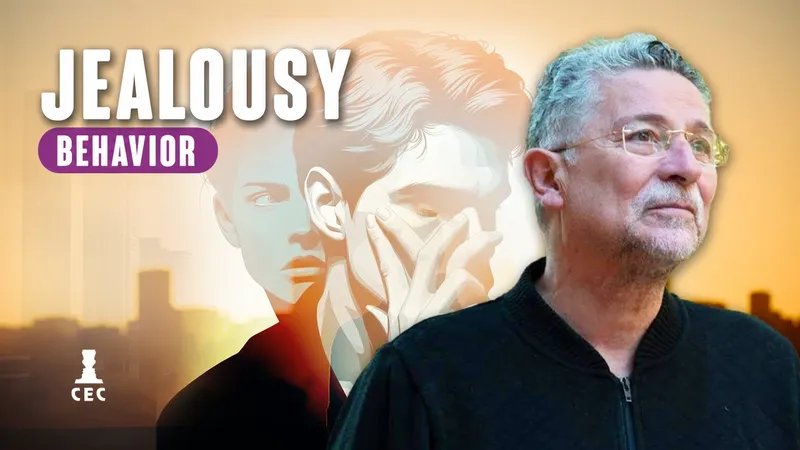
In jealousy, insecurity and unresolved emotional issues fuel fantasies that override rational judgment. A jealous person distrusts their partner because they distrust themselves and begins to monitor phones, clothes, friendships, movements, and delays; even the absence of evidence reinforces suspicion. Jealousy is not a sign of love: it may reveal dependence, neediness, or fear and sabotage the relationship. Mature relationships require trust, conversation, and understanding differences, not control. When fantasies cause crises, crying, aggression, and suffering over events that did not happen, jealousy becomes pathological, and therapy is recommended to break this pattern.
Source transcript
Today's topic is jealousy. We have been addressing issues such as jealousy, envy, anger, depression, and emotional conflicts—behaviors that sometimes disrupt life. We also talk about love, peace, harmony, tranquility, and evolution. We discuss what we need to resolve, but we also recognize already resolved aspects that the listener puts into practice. No one lives only with anger or a bad mood; we have moments of happiness, joy, and productivity. Jealousy is not easy to handle. Why? A jealous person lives in the realm of imagination. They have a fantastic imagination, and when you place a person's imagination and rational side next to each other, it is very difficult for reason to prevail. Imagination reproduces itself.
Imagine the following situation: we tie a rope from one building to another on Avenida Paulista. You see a tightrope walker crossing it with a balancing pole. There is no wind; he crosses calmly, reaches you, and says, "I will train you for a year so that you can make this crossing in complete safety." Now imagine looking down. What would your reasoning be about the confidence required to cross? It is difficult, is it not? A jealous person has unresolved internal issues, such as insecurity, which is certainly one of the foundations of jealousy, as well as other emotional difficulties. There may also be hidden guilt in the person's pockets—in a shirt sleeve or jacket sleeve.
There may be depression, changing moods, the kind of mood that cannot cope and always disrupts a relationship. When another person does not know what state you will be in, they do not know how to live. If someone is always cheerful and playful, with emotional stability, you can say "good morning" with all your joy when you meet. But if someone has mood swings—cheerful and happy one moment and very ill-tempered the next—what happens to your "good morning" when you look at the person, speak, and find them in a bad mood? It does not come out.
A jealous person has emotional characteristics that sabotage their relationships. People often say that jealousy is healthy. Jealousy indicates a difficulty that needs to be resolved. Is there any couple in which neither person feels jealous of the other? In a mature relationship, a person exposes themselves completely, expresses their feelings, and the other person does the same. They have already resolved matters within themselves, know what they want from life, and know whom they want beside them.
It is more difficult to achieve a situation like that in the early stages of life, during adolescence or around the ages of 25 to 30, because many things are not yet well established in the personality. But a well-adjusted person can have a peaceful relationship with someone else; they will not keep questioning because the matter is already settled, as they choose their partner better and the partner also chooses them better. It is therefore a matter of maturity.
Imagine an immature person who, upon beginning to control someone else, monitors the phone, pockets, and bags. They look around and take everything out of the other person's pockets to see whether they can find something; if they find nothing, they think they failed to locate it—which is even worse. The object must be somewhere; if they could not find it, perhaps the other person hid it. The woman then asks where it was hidden, because it was not in the pocket and must be somewhere else.
The wallet is systematically searched, as is the car. No car washer can carry out an inspection as careful and perfect as that of a jealous woman or man. They smell the clothes, smell their partner, search drawers, and follow the person; the situation intensifies. Every delay, however small, causes imagination to combine with all of the person's insecurities, making matters increasingly worse.
A jealous person has the ability to fantasize and wander through the infinite space of insecurity, amid unresolved issues with no end. Some people claim that jealousy is a sign of liking someone; there is also a belief that jealousy is a sign of insecurity. Jealousy has nothing to do with the other person; it has to do with you. Why is it not a sign of liking someone? Because you may be jealous of your little dog, your mother, or your father. It therefore has nothing to do with the other person, because the other person is not a fixed object. It is not a sign of love; it may be a sign of dependence, neediness, or fear.
A jealous person ultimately becomes a liar because they follow so many internal emotional paths that they cannot tell where they are. In the relationship, they do not even know what they are, because the other person acts naturally, but everything the other person does is always grounds for suspicion. They distrust the other person because they distrust themselves; they do not have the internal organization needed to see reality—they see fantasy. There is guilt, fear, and sometimes trauma. Some people who have been betrayed become excessively jealous.
I am going to read an email we received: "I am very jealous, and my fiancée is very beautiful; she was my ideal woman and companion, but she is very cheerful, smiles a lot, and talks to everyone. I get very upset when she talks to everyone. From time to time, I lose control, raise my voice, and become aggressive. She tries to calm me down and, the last time I became irritated, said that she does not want to live this way, having to endure my lack of control. She told me to seek therapy. I do not know whether that will solve it."
A jealous person does not see the other person. They cannot see the other person even when that person is doing everything possible to please them. A jealous person feels an immense emptiness; regardless of what you do, if you bring them flowers, they will not believe that the flowers were given with affection and love—they will think you are trying to cover something up. If you arrive home in a happier mood, whether you are a man or a woman, they will also become suspicious.
If you are jealous, consider your fiancée beautiful, and see her as the woman you want for a wife, you need to be healthy. An unhealthy person can damage the relationship and make the partner ill. It would therefore be a good idea to care for yourself so that you can build a relationship of love, affection, and trust with this person. A happy relationship cannot exist without trust. There must be trust, exchange, and conversation. You should be able to laugh when someone makes a mistake. One of you will make mistakes, and you should laugh instead of becoming extremely annoyed, irritated, and aggressive. In this way, it is possible to see the other person better, feel affection for them, and truly build a relationship.
Your fiancée is right. Seek therapy because there are situations we simply carry along, and given what you are saying, no matter what she tells you, you will continue to become irritated and will end this relationship. You will lose your fiancée and may regret it because she may truly be a very nice, cheerful, happy, and well-adjusted person who likes you very much—which is the worst part. You gradually destroy her liking for you. As for love, I do not know, because I think love is built over the course of a union. We need more time. You will come to know the person; differences are not meant to be corrected but understood. If you try to correct what is different about the other person, you will prune them.
It is necessary to resolve matters in order to understand. If the person has something that I must either accept or not accept, and I do not accept it, then I do not stay with them. But therapy would be a good idea. If you are very jealous, you are working against the relationship and sabotaging it. A jealous person is not sincere, views everything with suspicion, avoids certain places and friends considered dangerous, and prevents their partner from going wherever they want.
There is an email that says: "My jealousy ended my marriage. I am now with another partner and am following the same path; I cannot control myself." When the husband goes out, he cannot look to the side or at anyone; he has to remain rigid. This is a classic email: he cannot buy a new shirt or do anything. If this is not good for a relationship, reconsider the idea that a little jealousy can be healthy. We buy many ready-made ideas, do we not? Some things are common but are not normal. Observe which area you want to live in: that of what is common or that of what is normal. Normality is also open to question, but it does not create internal difficulties and brings more peace than conflict. You are therefore closer to what is normal than to what is not functional. Think about that.
If you live in this state of jealousy, endlessly feeding fantasies and daydreams, becoming disturbed, entering into crises, and crying, something is wrong: the jealousy is no longer normal; it is pathological, an illness. At the level of illness, you truly should seek therapy to leave this behind and stop suffering over things that are not happening. In reality, you keep fighting with your husband, who loves you and is doing nothing wrong. The better he treats you, the worse you treat him, because this is the jealous person's reaction: when someone is doing something right and trying to please them, the jealous person thinks something is being hidden. Reflect on this because your fantasies travel through the limitless space of the universe without control. That is not advisable.
Questions raised by this material
- How does imagination fuel jealousy?
- Is it possible to have a relationship without jealousy?
- Why do jealous people try to control their partner?
- Is jealousy a sign of love?
- When should someone seek therapy for jealousy?
Keywords
How to cite
Esagüi, M. (2021, June 8). Jealousy [Audio podcast episode]. Center for Consciousness Studies. https://centrodeestudos.org/en/library/jealousy/