Give & Receive Energy

Summary
Behavior change sustains spiritual growth, but impulses, conditioning, and demands from the lower chakras encourage a return to old patterns. Family members and spirits with similar patterns may also resist; sustaining change leads spirits that reinforce those patterns to leave. The path is gradual: recognize repetitions and motivations, choose one aspect at a time, seek knowledge and healthy exchanges, and avoid situations that encourage relapses. Meeting basic needs in a balanced way and finding pleasure in knowledge, linearity, and life purpose help overcome compulsions. Professional support may be necessary when dealing with disorders or difficulty recognizing what needs to change.
Source transcript
Today we are going to discuss the challenges of behavior change, a topic relevant to all of us.
We recently launched a survey about which CEC topics are of greatest interest. The results showed that 60% are interested in astral projection and laying on of hands, followed by behavior at 58%, chakras at 52%, and reincarnation at 37%. It is interesting to see behavior so close to astral projection and laying on of hands because people often want to learn astral projection, but behavior is fundamental to spiritual development.
If we do not grow, what good is astral projection? We can have an out-of-body experience, but what will that experience be like? It will always be limited to what we are. If I have a lucid astral projection and leave the body, I will encounter what I am. This means that I will see only spirits around me with the same pattern as mine, within the limit of my spiritual evolution. The same applies to clairvoyance.
Managing to leave the body and see a super-advanced helper is difficult unless the helper wants to reveal themselves by becoming denser or even partially materializing. This happens not because of our ability, but because of the helper's goodwill. Our ability always leads us to encounter what we are. During laying on of hands, I can do wonderful work assisted by spiritual helpers, but my maximum effectiveness will come when I reach a better evolutionary level. That is why we emphasize behavior.
Moisés's book "Projection of Consciousness: An Evolutionary Tool" is an evolutionary tool that discusses our evolutionary levels and those of the people on this planet. Through astral or mental projection, he mapped the condition of the planet's spiritual consciousnesses. Most of us, about 80%, are in the emotional chakras, which means reactive and impulsive conditions. Only 18% are in a better condition, fluctuating between the emotional and upper parts and already seeing a little better. Only 2% are advanced and highly advanced consciousnesses.
This is the condition of our planet. The 80% who are still in the emotional part have characteristics of reactivity, impulsivity, and immaturity. When we were babies, we cried and our needs were met, learning what lack, satisfaction, and pleasure are. Ideally, we grow and become less reactive, impulsive, and immature.
Maslow's hierarchy of human needs presents a pyramid in which we need to meet basic needs in order to achieve self-actualization. Physiological needs such as eating, drinking, breathing, sleeping, sexuality, and excretion are at the base of the pyramid and are related to the base chakra. We need these things, but how do we meet these needs in a healthy way? Most of us do not follow an adequate diet. After Moisés's mapping, which indicates that 80% of people have difficulties and 18% fluctuate, it becomes clear that we pursue pleasure and satiety inappropriately, eating poorly and compulsively. One challenge is changing our diet. In addition, many of us do not drink enough water, preferring beer, wine, whiskey, or juices.
Try a healthy diet, drink water, and care for your sleep so that you feel more nourished and satisfied, reducing the relentless pursuit of satisfaction. Sleep is fundamental. Who sleeps peacefully and wakes up energized? Few people, because we are anxious and in a hurry, contrary to the basic needs Maslow describes. We should seek balance, not artificial substitutes. As for pleasure and satisfaction, seeking pleasure is not bad, but it is important to understand the difference between impulsive pleasure and full pleasure. Sexuality, for example, is often experienced impulsively, connected to our animal origins rather than love and affection. This is not about prohibiting sexual relations, chocolate, or wine, but about reflecting on how we experience these pleasures.
People who are evolving do not have compulsions, but they experience full pleasure. As we evolve, we seek pleasure in knowledge. Transforming information into knowledge is extremely pleasurable. Every step in this process is gratifying. Many people have already felt this kind of pleasure, but it lasts only briefly because we quickly return to our neediness. People who are growing seek pleasure in expanding their symbolic universe and becoming independent.
This is the path for adolescents and adults who want to grow. We should seek pleasure beyond physiological needs, overcoming emotional neediness. Another form of pleasure in growth is linearity. Most people do not know what it means to be linear and live on an emotional roller coaster. Stable people experience linearity, a state of emotional balance.
Is linearity pleasurable? Yes, although we often think it is not. We believe that peaks of euphoria are wonderful, but the drops are difficult. We are accustomed to living this way, but when we adopt a more linear life, we discover that it also contains pleasure. There is pleasure in expanding, moving beyond one's own ego, and helping others. There are countless forms of pleasure that we do not know. It depends on which pleasure we seek and what demand we have. Many of us experience pleasure when overcoming challenges or performing good deeds. Doing something good brings pleasure. I believe there is nothing more pleasurable than following one's purpose in life, knowing what we came here to do, and moving in that direction. This is the great pleasure that nourishes us.
However, we operate by impulse: we feel pleasure but soon collapse, falling into repeated patterns accompanied by guilt. What do we do? We eat too much, without control. Even when we promise not to overdo it, we end up consuming more than we planned. Why can we not take only one small piece of chocolate? Why does that small piece become half a bar or even a whole bar? Because, although we resolve not to take it, we eventually give in. This also applies to our needs for security, affection, and relationships.
We operate more through fear, in the opposite direction from security, and this prevents us from relating affectionately. We become controlling, aggressive, or passive and face difficulties changing. What Moisés teaches us is that our growth comes from behavior change. If we cannot change, how will we grow? That is the question. We set an intention but do not sustain it. We remain in the new pattern for a week but soon return to the old one. Our growth comes through behavior change. What are the challenges?
A listener says that we need to watch the livestream again to understand it better. We stop at ourselves, at the drives and issues of our evolutionary level. Another listener mentions the difficulty of modifying conditioning and highlights the importance of self-knowledge. We often act through conditioning, like animals, without reflecting. Another listener comments that he comes from a family of nervous people, which is a difficulty. Another listener is always analyzing himself in order to improve along the evolutionary path, discovering models instilled during childhood. We were not educated to see ourselves, but to make excuses and justify our behavior as normal.
A listener plans changes and creates time-management spreadsheets, but does not complete the activities. This occurs because, at the moment of action, demands from the base, spleen, and navel chakras arise and divert us. Even with planning, we end up doing something else, such as watching a series. These demands from the lower chakras hold us back, but it does not always have to be this way. We are going to discuss the challenges and paths for changing this. As we grow, we move away from the demands of the base chakra, and they diminish.
Many of us eat for pleasure and appreciate flavor. People such as Moisés, for example, have no sense of taste. During the COVID pandemic, many people went into crisis because they could not taste anything, but this makes no difference to Moisés because his pleasures go beyond taste. A listener, for example, cannot stop eating chocolate even though she is diabetic, illustrating how our statements complement one another.
Maslow stated that we have basic needs, including food. If we nourish ourselves, we will not die, but we do not work on our own behalf. To evolve, we should not act against ourselves. What prevails is our inability to accept a "no," like a baby who cries and needs to be fed. The challenge is to understand what we are, beginning with our origins, our repetitions, the affection we did or did not receive, and excess or insufficient pampering.
That child still screams within us, especially if we are in the base chakra, in the childhood of maturity. Another factor that hinders us is the spirits and people who accompany us. I am speaking of the group karma, our family, which has dietary and behavioral patterns. When someone decides to change, how will the family react? Many of us face family resistance when seeking an evolutionary path. The reaction is generally not support but questioning: "Why change? God made meat to be eaten." It is the fear of loss, of losing us. The family reacts with resistance.
A listener says that he is tested every second. Another listener mentions that the family reaction is harsh. Another listener comments that only his mother supports him. Another listener was excommunicated by her family. I am speaking of the incarnated family whom we see and with whom we interact. They do not like differences because they interpret them as rejection. Moisés sees the spirits accompanying us, who are at the same energetic level as we are. Even if we see ourselves as different, the dense energy we emanate attracts similar spirits.
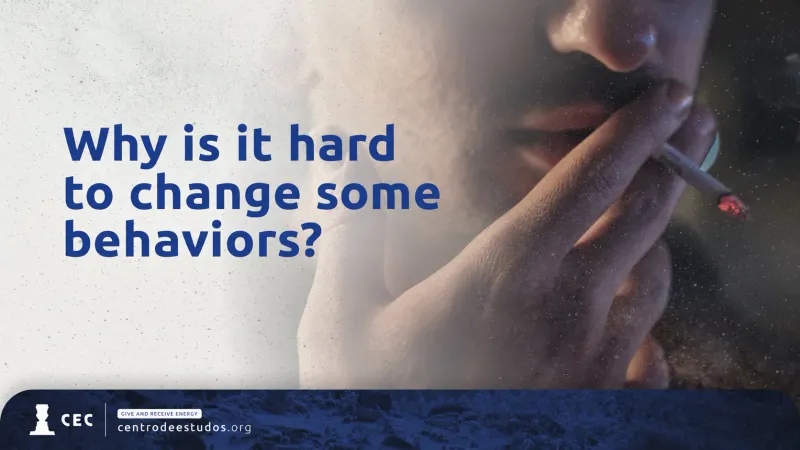
If we smoke, we attract spirits who smoke. Deciding to stop smoking is difficult because the spirits around us encourage us to continue. For how many minutes, hours, or days can we sustain this decision? It is a challenge because they smoke with us. Alcoholic beverages, drugs such as marijuana, and other substances can operate at varying levels, generating momentary pleasure. This pleasure is an energetic discharge that spirits around us can absorb. In addition to addictions and compulsions, family patterns influence our choices. We often decide not to share personal changes with the family because we fear that they will not accept them. We forget, however, that family spirits may also reject these changes and react negatively.
For example, if you seek spirituality, disincarnated relatives from fervently religious backgrounds may try to dissuade you, causing discomfort such as nausea or headaches so that you give up and remain within the family's religious practices. In his videos, Moisés mentions that we are not a single ego but a collection of several egos. This means we are accompanied by various spiritual consciousnesses. When we watch a livestream, these consciousnesses are also present and observe our reactions. Some may support it and take an interest, while others may resist. When I began following Moisés's work, I encountered the idea that spirits similar to us accompany us, which was a shock because I believed in a mentor of light who guided me.
I decided that, when listening to audio or watching videos, I would leave the sound on so that these consciousnesses could also listen, believing that whoever could tolerate it would remain beside me. Over time, as we improve ourselves, the consciousnesses around us also change. These various egos can help or hinder us, especially because we do not see them. It is important to become aware of this. Often, when we do something positive, critical thoughts and doubts arise that may not be ours, but spiritual influences. This inner conflict can generate guilt and confusion.
Our goal is to raise the level of these egos, but this happens only if we also raise ourselves. When we decide something, such as following a healthy diet, we need strength of decision. By saying "no," we are communicating both with ourselves and with the spirits around us. Sustaining this decision is crucial because internal and external excuses for breaking it may arise. For example, when we decide not to eat chocolate, justifications for giving in may arise, such as special occasions.
It is important to remember that, when asserting a "no," we are committing ourselves both to ourselves and to the spirituality around us, and we must be prepared to sustain that decision. We are going to discuss the challenges and paths for changing this. We realize that we are constantly pampering ourselves and making excuses, but in order to grow, we need to follow a more coherent path. A listener mentioned that he will watch the livestream again, and another listener asked a question that I will consider. Another listener commented that we have the company we deserve. Another listener said that she quit smoking on her fourth attempt. Another listener asked how we should act toward those who cannot meet their own needs and to what extent we should help them.
We should not assume responsibility for others unless they have a severe disability. We should offer warmth, affection, and knowledge, but not meet every need, because needy people are like a bottomless pit. This can lead to codependence, in which the person depends on you and you depend on that dependence to feel important. We have already discussed codependence in previous livestreams, but it is a relevant topic when speaking about meeting neediness.
To deal with this, with both incarnated and disincarnated consciousnesses, it is important to take a stand. Even when dialogue is difficult, living your life as well as possible can positively influence others. Dialogue is crucial because, when you speak with someone, you also communicate with the spirits around them. Dense spirits do not read thoughts, so clear communication is essential. When we disincarnate, we retain our characteristics, so if we are closed off, we will continue that way.
When you talk with someone, you are also communicating with their group karma, which makes knowledge and the choice of words fundamental. What I am discussing here could generate several other livestreams, such as one about communication. A listener commented that, in cases of disorders that cause great distress, what we discuss here alone may not be sufficient. Professional support is often necessary, especially in cases of ADHD and autism. CEC knowledge can complement and help.
A listener mentioned that he quit smoking and has already noticed a spiritual difference. He asked how to keep the base chakra from prevailing over the higher chakras and how to change the symbiosis in which he lives. This is a common question because we all want to reach the higher chakras. As we grow spiritually, some things cease to exist. When we reach the heart chakra, many of our drives diminish, and the body does not pull us down as much. However, this path requires effort and courage because nature does not make leaps.
To begin this journey, it is important to write down all the changes we want. There is no point in wanting to change everything at once because we repeat patterns from past lives. Change should be gradual. Analyze your life, identify repetitions, and understand why you want to change. This motivation is essential. For example, ask yourself why you want to practice astral projection, be less reactive, or stop smoking. Knowing the reason is crucial to moving forward.
Choose one item at a time to work on and live this intention. Study, write, and seek information that becomes knowledge. When a relapse occurs, such as smoking a cigarette or exploding in anger, replenish yourself with information. Healthy exchanges are fundamental. Avoid situations that can sabotage your progress, such as going to bars if you want to stop drinking.
You do not need to live in a bubble, but seek relationships aligned with your current moment. In relation to dense group karmas, the ideal is to accept people in our hearts. Sometimes temporary distance can be beneficial for reflecting and charting your path, but it is important to work on inner acceptance so that you do not carry criticism and judgment.
A listener commented on the difficulty of growth when there is no dialogue. In situations of extreme aggression, choices need to be made. Sometimes distance may be a solution, but always consider what is best for our personal growth. It is important to continue analyzing yourself because we cannot change others, only ourselves.
When we change, the spirits accompanying us also change. For example, if you have stopped smoking, the spirits who smoke will eventually give up on you and seek someone else. Any behavior change that was stimulated by a spiritual group may cause those spirits to give up. Moisés has a wise saying: "Nothing resists continuity." If we have the strength to continue, they will leave.
A listener mentioned that his motivation for quitting smoking was being able to donate energy. He stopped a month and a half ago and is already a donor. TAD, our energy donation at a distance, allows you to be both donor and recipient.
If we cannot see what we need to change, seeking a professional can be useful. We have an obligation to change what we can see and seek help for what we cannot see.
Now I invite you to watch a video I selected, which I consider wonderful. The great idea happened more than eight hundred years ago. Imagine a person who was rich and had everything they needed. Suddenly, they decide to change their life radically, choosing to leave everything behind with the goal of finding themselves. To make such a change, a person must be moved by a very great force. We are accustomed to so many superficial things that distance us from ourselves and from the path of growth. To change, we need to believe that this transformation will give us the best that life can offer: an encounter with ourselves. We are life, but the way we proceed increasingly distances us from it.
If you need to change something in your life, have courage, use good judgment, and believe, without waiting for others to decide for you. The best decisions are born within our own hearts, not within other people's. Believe that the change you make may be the best thing in your life, enabling you to encounter yourself. Have courage. I hope this message is a seed that blossoms in your heart, leading you to a state free from suffering and conflict.
Now, let us donate energy to CEC's helpers for ten minutes. I ask you to make contact with the palmar chakras and feel them. Breathe deeply as if your heart were your lung, and feel your heartbeat in your hands. Keep your focus on your heart and on what motivates you to open your hands and donate energy. If your mind wanders, return to your breathing, imagining that the heart receives the air entering through your nostrils. Give thanks with each inhalation, thinking of something in your life for which you are grateful. Extend your hands, focusing on the palmar chakras. Feel what happens to them during this work. Be present, assisting the spiritual helpers.
Questions raised by this material
- Why is it so hard to change your behavior?
- How can you find pleasure beyond meeting basic needs?
- Why might family members resist when someone changes their habits?
- How do spirits influence behavior change?
- How can you make gradual, lasting changes in your behavior?
Keywords
How to cite
Murad, A. (2023, October 18). The Challenges in Changing Behavior [Video]. Center for Consciousness Studies. https://centrodeestudos.org/en/library/the-challenges-in-changing-behavior/