Give & Receive Energy

Summary
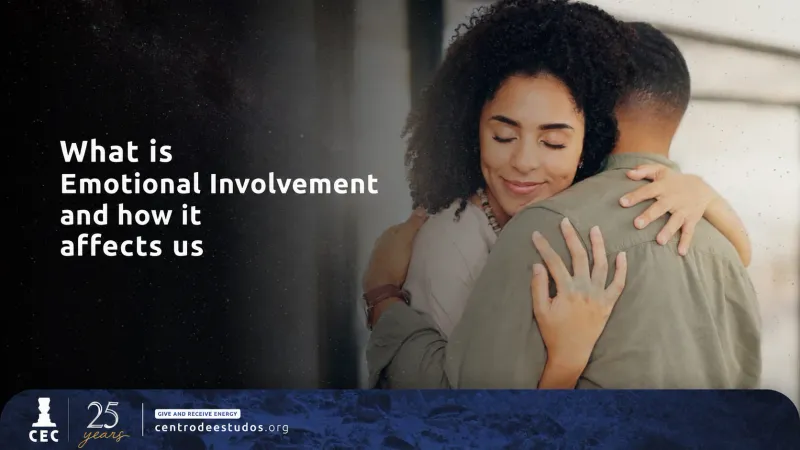
Healthy relationships foster self-knowledge and spiritual evolution because differences help us recognize who we are. Emotional involvement arises when we absorb other people's feelings and situations, creating energetic bonds that can cloud perception and make it harder to help. Understanding others without absorbing what they are going through allows us to help them with clarity, without coldness or selfishness. Assertiveness and recognizing that each person has their own reincarnational journey help preserve this distinction. Reassessing our attitudes and establishing energetic and spiritual barriers help us disengage from negative entanglements; becoming our own point of reference prevents codependency fueled by neediness.
Source transcript
The subject of emotional involvement is of interest to those who perceive the impact of involvement on their lives. Even for those who pursue astral projection or other spiritual practices, everything discussed about behavior is directly related to spirituality. Therefore, what is addressed here will have repercussions on the spiritual part. What is the difference between involvement and relationship? Relationship is the basis of growth and spiritual evolution, as Moisés teaches. We often associate evolution with an isolated life, as in Eastern traditions, where worldly pleasures are renounced in order to attain something elevated. Dedicating oneself to spiritual practices can bring results, but there is the concept of horizontal and vertical growth, symbolized by the cross.
Evolution occurs in relation to others. In isolation, we do not have the counterpoint of human differences. Each human being is unique, and we need many reference points to see variations and perceive ourselves through others. In this way, we begin to see within ourselves what we did not perceive before, enriching our self-knowledge.
Evolution can be understood in two ways: horizontal and vertical. Individual work and relationships with everything around us must go hand in hand in this growth. Initially, we begin with what is closest to us: ourselves, our family, and friends. In this process, we perceive the differences between ourselves and others and work so that these differences are not a problem. The goal is to resolve egokarma—to deal with who we are—and group karma, which involves resolving issues with our close circle.
As we relate to people in different contexts, such as school, work, and leisure, we encounter challenges. However, we can expand our impact to a larger group, which we call polikarma, where we learn and grow with a greater number of people. Relationships are crucial in this process because relating to others is fundamental to growth. Relationships are not limited to spouses or children; they can extend to the entire planet, depending on our competence.
For a relationship to be a tool for growth, it needs to be healthy. This means being open to exchange without barriers, prejudices, or judgments. The exchange should be free of interference, allowing communication and energy to flow without problems. When we are open and without blocks, our responses in relationships are authentic, without emotional discrepancies.
A healthy relationship is an exchange without obstacles, but throughout our lives, we accumulate blocks, prejudices, and judgments. These energy patterns manifest in our chakras and aura. In any exchange, whether with a child, friend, or boss, we are rarely free of expectations and personal characteristics. When we think about becoming involved with someone, we often see ourselves absorbing the other person's problems as if they were our own. This type of involvement can vary according to our characteristics and identity.
Excessive involvement occurs when we identify so strongly with another person's situation that it becomes part of our life. Depending on our behavioral characteristics, our level of involvement may be greater or lesser. For example, when a person who feels very guilty says "no," even gently, they begin accumulating within themselves a series of emotions of guilt for having acted that way. When we behave with guilt, we are already becoming emotionally involved with the other person. From an energetic and spiritual standpoint, this involvement occurs when we mix with what the other person is. When we become involved with someone's situation, feelings, or circumstances, we create an energetic bond with that person or situation.
This involvement causes us to exchange and assimilate energies, incorporating these situations into our lives. Involvement occurs constantly, especially when we are surrounded by many people, because we are always making energetic exchanges and compositions. When we wear a social mask, trying to be pleasant or appear to be something, we shape ourselves to situations and become involved with others. If we were 100% authentic, without masks, we would not become involved with anyone or anything around us.
It is interesting to reflect on the social masks we wear and whether we truly need them or adopt them because of other people's influence. Involvement is not limited to friends or relatives in extreme situations; it is present in small everyday details. For example, when we speak ill of someone or are called on to participate in something, we make our energy available to that situation or relationship.
When we are called on, our morals and ethics are fundamental in deciding whether we will become involved. Having well-defined behavior patterns helps us avoid unwanted involvement. Learning from our mistakes allows us to grow, but it is important to recognize when we make serious mistakes. We are often called on to become involved in situations of malicious gossip, when someone speaks badly about another person. This usually occurs in the emotional area, related to the lower chakras, which deal with emotions. When these emotions are exacerbated, we feel pleasure and our chakras accelerate. This behavior is common among approximately 80% of the population.
When a friend speaks badly about someone, we tend to believe the friend out of emotional convenience. We support what suits us, especially when it comes from someone close whom we like and with whom we have affinity. Thus, if a friend criticizes someone else, we are likely to accept the friend's opinion even if it is unfair. It is important to have a more impartial, fairer, and clearer view of things. For this, it is necessary to stop becoming emotionally involved and avoid convenience and any kind of bias.
Why are we unable to question a friend? Because doing so requires taking a position. We need to tell the friend that we may disagree and that we need to reflect and have our own experience before commenting. If you believe someone is experiencing difficulties, you should speak with that person. Assertiveness is fundamental because, by being assertive, we show who we are, help the other person see themselves, and contribute to resolving the situation. This can benefit everyone involved because the friend may perceive the need to change their behavior.
When we open ourselves to another person, we allow an auric connection, becoming involved with the person and their spiritual companions. We share experiences, as when someone becomes involved in a situation and feels its repercussions in their life. For example, when you agree with someone full of anger, you may begin to feel the same anger and see people as problems. This may last until the person moves physically away, allowing clarity and the perception that things were not quite that way.
Becoming involved brings into our life elements that, without spiritual or moral clarity, may be difficult to identify. Therefore, it is essential to begin relationships in a healthy way. Taking a position with friends or acquaintances is an exercise in assertiveness. It is not easy because it involves dealing with emotional contents such as fear and frustration. Assertiveness is a path to be followed.
Have you ever become involved in situations that brought negative consequences? It is difficult for this not to have happened. We speak about the aura and how our involvement is connected to the bonds we establish with it. We study auras and perform exercises to feel this energy. A listener asked about family involvement, such as with children and spouses. When we speak of involvement, we refer to identifying who we are and who the other person is. If someone close is facing difficulties—health-related, emotional, or financial—you may begin to feel bad. When you perceive that someone is going through a difficult situation, it is natural to want to help. This is not a problem; on the contrary, helping others is one of the best things we can do, provided that we have clarity about our actions.
When it comes to close family members, such as children or spouses, deciding whether or not to become involved is more complicated. For example, if your child has problems, it is difficult not to become involved. It is important to help those around us, but we should distinguish what we are from what the other person is. Each family member has their own reincarnatory path, with unique lessons, suffering, and happiness. We should focus on our own growth and evolution, understanding who we are and who the people around us are. Without clarity and knowledge, this lack of differentiation between ourselves and others can generate suffering. An interesting question concerns the difference between noninvolvement and being selfish or cold. Noninvolvement can be healthy, but selfishness and coldness are dysfunctional.
We become emotionally involved because we are still in the emotional chakras. A higher consciousness does not become emotionally involved, but understands situations. It is challenging to distinguish between not being sensitive and not becoming involved. It seems that we need to feel what the other person feels in order to help, but in fact, we need to understand the situation in order to help effectively. Compassion is a concept that varies: it can mean being sensitive to what another person is going through or putting oneself in their place. Depending on how compassion is understood, it can lead more to involvement than to something healthy. It is crucial to reflect on the meaning of the words we use and have clarity about them.
For those who live in society, empathy is fundamental. However, when we speak of an advanced consciousness, this consciousness can see everything you are with total clarity, including your suffering and difficulties. This clarity allows it to take meaningful action to help you. This contrasts with emotional involvement, in which, upon seeing someone in difficulty, we may become clouded and unable to act. Remaining outside this involvement allows us to help with greater perspective and effectiveness.
Regarding extraterrestrials, specifically the Zetas or Greys, they are often portrayed as cold because of their lack of emotional expression. However, according to Moisés's experiences, they are not cold or without feelings; they have feelings, but not emotions. When we see something that seems cold, we tend to think that it is bad, but this is a matter of our reference points. If we see someone in difficulty and do not demonstrate that we are suffering with that person, it may seem cold, but in fact, we may be in a better condition to truly understand and help.
I remember a story about Moisés's mother, a very dear figure with a high level of consciousness. When Moisés was a child, a man was aggressive toward his mother at their home while charging for a service. She, however, asked him to return in a few days and paid him. Moisés, confused, asked why she had done this, and she replied that he was merely someone in despair who needed help. This illustrates how, in difficult situations, we can choose not to react emotionally, but instead to help.
A listener commented on receiving responses respectfully. Even if we receive an aggressive "no," the issue is how we respond. We should maintain a consistent response and not become emotionally involved, even if we are not at the ideal. A listener asked about how not to react emotionally when our personal space is invaded. It is important to perceive what we feel and practice assertiveness. This is an ongoing exercise in which we can improve over time.
A listener asked how to break free from emotional contamination. When we perceive that we have become involved in something negative, such as malicious gossip, we can take a position and establish energetic and spiritual barriers. This helps prevent the situation from recurring and frees us from guilt. In addition, energetic exercises can be useful, but reviewing our attitudes is crucial.
When we speak of involvement, it is important to understand why we become involved. Our forms of neediness often lead us to seek energy in another person, creating codependence. We may become involved in situations in which we are abused or manipulated. Seduction, for example, is a powerful form of involvement in which we are attracted by characteristics we desire. Regarding our reference points, Moisés speaks of the importance of becoming our own reference point. This means that although people are important, we should not depend on them for our inner structure. We should be whole, capable of using our energetic resources and chakras competently.
Questions raised by this material
- What is emotional involvement?
- How do relationships contribute to spiritual evolution?
- How does emotional involvement affect our energy?
- How does assertiveness help prevent emotional involvement?
- How can I help someone without becoming emotionally involved?
Keywords
How to cite
Cabral, P. (2024, July 17). What Emotional Involvement is and how it affects us [Video]. Center for Consciousness Studies. https://centrodeestudos.org/en/library/what-emotional-involvement-is-and-how-it-affects-us/